Typology

Definition and stakes

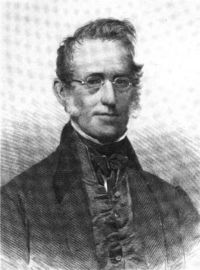
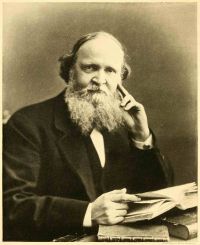
Portrait of William Dwight Whitney William Dwight Whitney,  Language and the Study of Language (1867)

“ We shall next pass in review the other great families into which the known forms of human speech are divided, noticing their most striking characteristics. Then will be taken up certain general questions, of prime interest and importance, suggested by such a review—as the relative value and authority of linguistic and of physical evidence of race, and the bearing of language upon the ultimate question of the unity or variety of the human species. Finally, we shall consider the origin of language, its relation to thought, and its value as an element in human progress. ”
Source: Wikisource

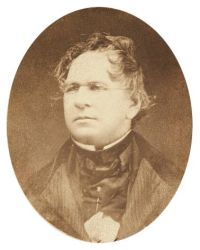
Portrait of Herbert Spencer Herbert Spencer,  Essays on Education and Kindred Subjects

“ Were there space we might go on to point out how this law of life is traceable, not only in the origin but in the development of language; how in primitive tongues the plural is made by a duplication of the singular, which is a multiplication of the word to make it like the multiplicity of the things; how the use of metaphor—that prolific source of new words—is a suggesting of ideas that are like the ideas to be conveyed in some respect or other ”
Source: Gutenberg

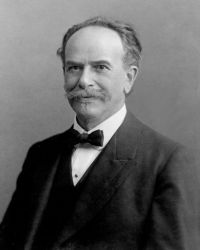
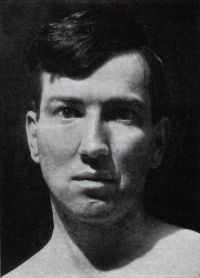
Portrait of Woodrow Wilson Woodrow Wilson,  Mere literature, and other essays

“ It is thus that it has become “scientific” to analyze language as itself a commanding element in man’s life. The history of word-roots, their modification under the influences of changes wrought in the vocal organs by habit or by climate, the laws of phonetic change to which they are obedient, and their persistence under all disguises of dialect, as if they13 were full of a self-originated life, a self-directed energy of influence, is united with the study of grammatical forms in the construction of scientific conceptions of the evolution and uses of human speech. ”
Source: Gutenberg

Get perspective with Kwize: daily news enlightened by great literature