Vocal cord

Definition and stakes

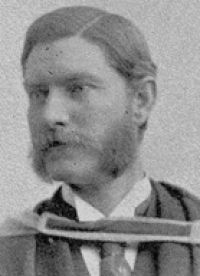
Portrait of F. W. Mott F. W. Mott,  The Brain and the Voice in Speech and Song

“ In the production of chest notes the whole vocal cord is vibrating, the difference in the pitch depending upon the tension produced by the contraction of the tensor (ring-shield) muscle. When, however, the change from the lower to the upper register occurs, as the photographs taken by Dr. French and reproduced in a lecture at the Royal Institution by Sir Felix Semon show, the vocal cords become shorter, thicker, and rounder; and this can be explained by supposing that the inner portion of the vocal muscle contracts at the break from the lower to the upper register (vide fig. 11) ”
Source: Gutenberg

Various,  Popular Science Monthly (1889)

“ I have suggested that the terms "long reed" and "short reed" register should be used to designate the two fundamental divisions of the human voice. In the former, usually called "chest voice," the vocal cords vibrate in their whole length, and the sounds are re-enforced largely by the cavity of the chest, the walls of which can be felt to vibrate strongly when this register is used. In the latter, "head voice," or falsetto, only a part of the cord vibrates, and the sound is re-enforced by the upper resonators, mouth, bony cavities of the skull, etc. ”
Source: Wikisource

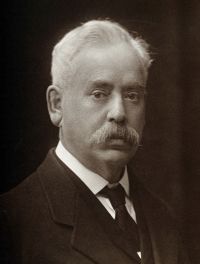
Portrait of John Gray McKendrick John Gray McKendrick,  1911 Encyclopædia Britannica, Volume 28… (1911)

“ During head voice, the opening between the arytenoids is completely closed; the portion between the vocal cords is open, but in place of being almost a narrow straight slit as in chest voice, it is wide open so as to allow an escape of more air (see fig. 12) . Paralysis of the motor fibres causes aphonia, or loss of voice. If one cord is paralysed the voice may be lost or become falsetto in tone. Sometimes the cords may move in breathing or during coughing, but be motionless during an attempt at the production of voice. ”
Source: Wikisource

Get perspective with Kwize: daily news enlightened by great literature