Weight (unit)

Definition and stakes

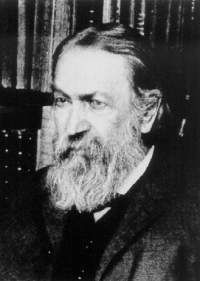
William Matthew Flinders Petrie,  Encyclopædia Britannica, Ninth Edition (1888)

“ A unit of weight is the attractive force exerted between a unit of mass and some given body at a fixed distance,—this force being the weight of the unit in relation to the given body, or any other body of equal mass. [1] Usually the given body is the earth, and the distance a radius of the earth. For instance, the unit of weight in Britain is the attraction between the earth and the standard pound when that is placed at sea-level at London, in a vacuum. For astronomical comparisons the unit of mass is the sun, and a unit of weight is not needed. ”

Source: Wikisource

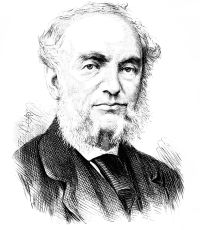
Portrait of Arthur Edwin Kennelly Arthur Edwin Kennelly,  Popular Science Monthly (1904)

“ A mosquito will weigh in the neighborhood of a milligram, a U. S. nickel, fresh from the mint, five grams, an average man seventy kilograms, an average elephant about 3,000 kilograms or 3 metric tons. In this manner the weight of any object is brought immediately before the mind in relation to that of any other object, large or small, since virtually one and the same unit—the gram—is used throughout.
In contrast with this simple expression of weights in the metric system, we have in our systems three kinds of weights: viz., apothecary's weight, troy weight and avoirdupois.
”
Source: Wikisource

Get perspective with Kwize: daily news enlightened by great literature