AI-generated from sources
The silent eloquence: Historic debates on the intellectual capacity of sign language
In Brief
- Historically, sign language has been contested, characterized either as a 'primitive' precursor to speech or as a complete, parallel linguistic system.
- Sign language possesses an independent syntax and logic, distinct from the grammatical rules of oral speech, and must be mastered on its own terms.
- While some gestures are universal, complex sign languages are learned, conventional systems that adapt and expand their vocabulary like any spoken language.
- Acknowledging the full intellectual capacity of sign language challenges the historical bias that has privileged speech as the sole medium of higher thought.
Main authors
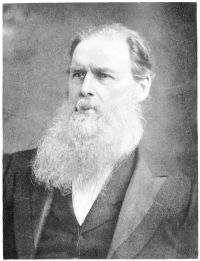
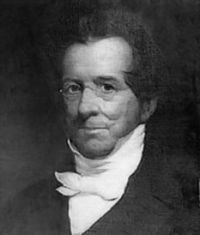
The status of gesture-based communication has long been a subject of profound debate, occupying a contested space between a perceived primitive tool and a universal expression of intellect [1, 2]. This discourse is not merely academic; it directly shapes the societal standing and perceived cognitive abilities of the deaf community [3, 4]. The central question revolves around whether sign language is a rudimentary precursor to spoken language, limited in its capacity for abstraction and complex thought, or a complete and parallel system of human expression, fully equivalent to articulate speech [5, 6]. The answer determines whether deafness is viewed as an intellectual deficit or simply a different mode of experiencing and communicating with the world.
Historically, the journey toward recognizing the intellectual capacity of the deaf has been intertwined with the development of formal education systems designed for them [7, 8]. Pioneers in this field operated from the foundational belief that the minds of the deaf were fundamentally normal, requiring only a suitable method to be 'awakened' and allowed to develop [9]. The establishment of specialized institutions was thus seen not only as an act of benevolence but as a unique philosophical endeavor [10, 11]. These educational settings became laboratories for exploring the very nature of language, the origins of moral understanding, and the processes of the human mind when unmediated by spoken words [12, 13]. This effort to unlock the potential of the deaf mind forced a direct confrontation with the capabilities and structure of the language they naturally employed: the language of gesture.
The Nature of Gestural Communication: Universal Instinct and Learned Convention
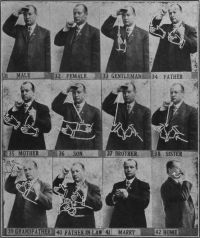
One of the most compelling aspects of gesture language is its perceived universality [14]. It appears to function as a foundational human communication system, capable of bridging linguistic divides where spoken words fail [15, 16]. This universality is rooted in its iconic nature, where the sign often bears a direct, imitative relationship to the object or action it represents [17, 18]. Unlike the arbitrary connection between a sound and its meaning in spoken language, a gestural sign for 'walking' or 'house' can be immediately intelligible without prior instruction . This intuitive link between idea and sign is seen as a key characteristic, suggesting gesture is a more primary and natural mode of expression than speech [19, 20].
However, this seeming universality coexists with a high degree of convention and stylistic variation. Within the broader framework of intuitive signs, specific dialects and individual 'calligraphies' emerge, indicating that sign language is not a monolithic entity but a living system that evolves within communities [21]. While a traveler can use basic gestures to communicate fundamental needs anywhere in the world , the complex systems used by deaf communities feature established, conventional signs that require learning [22, 23]. This dual nature—partially innate and universally understood, partially learned and culturally specific—highlights its complexity and refutes simplistic characterizations . The development of new signs for novel concepts, such as the telegraph, demonstrates its dynamic ability to adapt and expand its vocabulary just as any spoken language does [24].
This inherent structure makes the acquisition of sign language a fundamentally different process from learning a spoken one. Observers have noted that deaf individuals develop a high degree of proficiency in gesture with a natural ease that hearing people, accustomed to thinking in the linear sequence of words, struggle to replicate [25, 26]. The attempt by a speaking person to translate their native word order directly into signs often results in confusing or meaningless statements for a deaf person [27, 28]. This suggests that gesture language possesses its own distinct syntax and logical flow, operating independently of the grammatical rules that govern oral speech [29]. It is a system that must be mastered on its own terms, not as a visual transcription of a spoken tongue.
The Debate on 'Primitive' Structure
Critics and some analysts have characterized the structure of gesture language as 'primitive' when compared to the intricate grammatical systems of developed oral languages [30]. This perspective points to a perceived lack of clear distinctions between parts of speech, such as nouns and verbs, and a difficulty in representing abstract concepts [31]. The syntax is often described as a simple apposition of ideas, lacking the complex subordinate clauses and grammatical inflections that allow for nuanced predication in speech [32]. From this viewpoint, sign language appears to be an earlier, less evolved form of communication, a snapshot of how language might have functioned in the nascent stages of human development .
This interpretation, however, is challenged by an alternative view that frames gesture not as an incomplete version of speech, but as a system operating on a different foundational logic . The argument that gesture preceded articulate speech as the primary form of human communication reframes its structure as foundational rather than deficient . According to this theory, spoken language evolved from gesture, gradually becoming more abstract and arbitrary as the connection between the word and its original iconic representation was lost [33, 34]. In this light, the direct, logical sequence of sign language, where each gesture must be intelligible in the context of the one before it, is not a sign of simplicity but of a different and more immediate kind of syntactic rule .
Furthermore, the perceived limitations in abstraction may be a misunderstanding of the medium. While oral language uses arbitrary sounds as 'counters' for ideas , gesture often builds abstract concepts through metaphor and the combination of concrete signs . The very nature of gesture is seen by some as being more directly connected to the soul or intuition, grasping concepts holistically rather than through the sequential analysis typical of speech [35, 36]. Therefore, what appears to be a structural limitation might instead be a different, more concrete and contextualized method of constructing and conveying meaning [37].
A Complete System for Intellect and Thought
The ultimate question is whether sign language constitutes a complete vehicle for human thought, capable of expressing the same range and depth as any spoken language. Proponents argue emphatically that it does, asserting that any idea, no matter how complex or abstract, can be conveyed through a combination of hand gestures, facial expressions, and bodily movements . From this perspective, the potential of gesture language is infinite, and had humanity not developed articulate speech, sign could have evolved to support a high degree of culture and intellectual development on its own . The fact that concepts can be formed without words is evident in the cognitive development of young children and the uninstructed deaf, who build a rich understanding of their world through gestural and mimetic representation [38].
Conversely, some theorists maintain that while gesture is a powerful and essential component of communication, it remains an adjunct to speech rather than its equal [39, 40]. They argue that vocal language is uniquely suited for the expression of abstract thought, while gesture excels at conveying emotion, action, and concrete objects [41, 42]. In this view, gesture is one of several systems of communication, alongside writing and oral speech, each with its own domain of excellence [43, 44]. The inability of any single system to perfectly convey the totality of the mind's contents suggests that all languages are ultimately imperfect tools for plumbing the depths of the human soul [45].
This debate highlights a fundamental tension in how language itself is understood. Is the ideal language a universal one that unifies humanity by providing a single, clear key to the heart and mind [46]? Or is human intellect enriched by a diversity of communicative systems, each offering a unique lens through which to perceive and structure reality [47]? The study of sign language is crucial because it forces a move beyond a phonocentric view of cognition [48]. It demonstrates that complex, discursive thought is not exclusive to phonetic symbols but can be realized through visual-spatial systems that possess their own sophisticated grammar and expressive power [49].
The examination of gesture language reveals it to be far more than a primitive tool or a simple pantomimic aid. It is a distinct and complete linguistic system with its own logic, syntax, and capacity for evolution . The characterization of its structure as 'primitive' often stems from an attempt to measure it against the standards of spoken language, failing to appreciate its unique principles . The evidence suggests that gesture is not a failed version of speech but a parallel stream of human communication, potentially the original wellspring from which articulate language arose . Its perceived universality and intuitive nature do not detract from its capacity for complexity and convention .
Ultimately, recognizing the full intellectual capacity of sign language is inseparable from acknowledging the full intellectual capacity of the deaf community . The debate is less about the absolute limits of gesture and more about the cultural and philosophical biases that have historically privileged speech as the sole medium of higher thought [50]. By understanding gesture language as a sophisticated and universal faculty of the human mind, we not only correct a historical misconception but also gain deeper insight into the diverse ways consciousness can manifest, structure, and share its world . The silent eloquence of gesture stands as a testament to the remarkable adaptability and richness of human intellect.