Summary

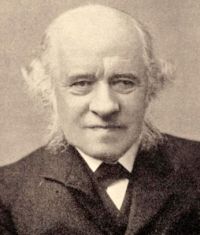
Portrait of George Grove George Grove A Dictionary of Music and Musicians (1900)

On the other side of the line, in both cases, orchestra and chamber, are a vast number of works full of beauty, interest, and life; breathing youth in every bar, absolute Schubert in many movements or passages, but not completely saturated with him, not of sufficiently independent power to assert their rank with the others, or to compensate for the diffuseness and repetition which remained characteristics of their author to the last, but which in the later works are hidden or atoned for by the astonishing force, beauty, romance, and personality inherent in the contents of the music.
Source: Wikisource

Portrait of George Grove George Grove A Dictionary of Music and Musicians (1900)

But they never obtrude themselves or become prominent. They are all merged and absorbed in the gaiety, pathos and personal interest of the music itself, and of the man who is uttering through it his griefs and joys, his hopes and fears, in so direct and touching a manner as no composer ever did before or since, and with no thought of an audience, of fame, or success, or any other external thing. No one who listens to it can doubt that Schubert wrote for himself alone. His music is the simple utterance of the feelings with which his mind is full.
Source: Wikisource

Portrait of George Grove George Grove A Dictionary of Music and Musicians (1900)

Carl Pachler was one of those cultivated men of business who are such an honour to Germany; an advocate, and at the head of his profession, yet not ashamed to be an enthusiastic lover of music and musicians, and proud to have them at his house and to admit them to his intimate friendship. Amongst his circle was Anselm Hüttenbrenner, the brother of Schubert's friend Josef, himself an earnest admirer of Franz, whose last visit to Vienna had been to close the eyes of his old friend Beethoven.
Source: Wikisource

Get perspective with Kwize: daily news enlightened by great literature