Summary

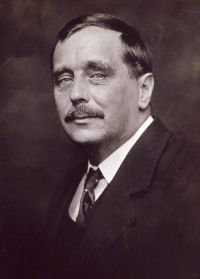
Portrait of H. G. Wells H. G. Wells Mr. Belloc objects to "The outline of history" (1926)

Belloc stands for the stout sensible fellow who believes what he sees; who considers that his sort always has been and always will be; who stands by accepted morals and time-honoured ways of eating and drinking and amusement; who loves—and grips as much as he can of—the good earth that gives us food for our toil; who begets children honestly by one beloved wife until she dies and then repeats the same wholesome process with the next; who believes in immortality lest he should be sorry to grow old and die
Source: Gutenberg

Portrait of H. G. Wells H. G. Wells Mr. Belloc objects to "The outline of history" (1926)

When one is really persuaded that there is nothing new under the sun, then there is nothing worth living for whatever outside the personal adventure, the dance between permanent individual beatitude or permanent individual damnation.
As this modern conception of life as a process of progressive change in which individuality of our order can be sometimes excessively exaggerated as it has been in the past and sometimes minimised as is happening now—as this conception establishes itself, it changes the spirit of living and the values of our general ideas about living profoundly.
Source: Gutenberg

Portrait of H. G. Wells H. G. Wells Mr. Belloc objects to "The outline of history" (1926)

He can hunt about for arrow-heads to bear out his valiant assertion that Palæolithic man was “an archer with an efficient weapon.” He will hunt until stooping and the sunshine make him giddy, in vain. And then, with these bones fresh in his mind, he should go to the Museum at Monaco and see the skeleton of a modern human being. He will find no end of loud talk and valiant singing and good red wine necessary before he can get back to his faith in man as a Fixed Type.
Source: Gutenberg

Get perspective with Kwize: daily news enlightened by great literature