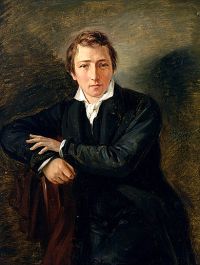
Heinrich Heine

Heinrich Heine

Summary

Portrait of Heinrich Heine Heinrich Heine The Works of Heinrich Heine (1906)

As a pietist he must naturally, according to his canting-pious nature, hate the poet whose soul, inspired with the spring-like air of the gods, breathes in every word the most joyous heathenism—yes, he should hate that believer in life, to whom the faith of death is in secret detestable, and who, revelling in the most enchanting delirium of antique heroic power, shuns the pitiful pleasures of humility, self-denial, and abasement! And yet he loves him all the same, and in his unwearied love would fain convert Shakespeare to the true Church
Source: Wikisource

Portrait of Heinrich Heine Heinrich Heine The Works of Heinrich Heine (1906)

Fortunately the interval was not long, else my musical fur-dealer had certainly involved me in a tiresome talk on art. Paganini set his violin leisurely to his chin, and with the first touch of his bow, there began again the wondrous transfiguration of tones. But now they were neither so startling in colour or so marked in form. They came forth calmly, majestically, waving and rising like those of an organ choral in a cathedral; and all the surroundings seemed to have expanded to a colossal space, such as no bodily vision but only the eye of the spirit can grasp.
Source: Wikisource

Portrait of Heinrich Heine Heinrich Heine The Works of Heinrich Heine (1906)

The chain of the sword rattled under the Spaniard's cloak, his cheeks became deadly white, his upper lip twitched as with scorn in which there was pain, and angry death grinned in his eyes as in an utterly changed, ice-cold, keen voice he said:—
"Senor Rabbi, you know me. Well, then, you know also who I am. And if the fox knows that I belong to the blood of the lion, let him beware and not bring his fox-beard into danger of death, nor provoke my anger. Only he who feels like the lion can understand his weakness."
Source: Wikisource

Get perspective with Kwize: daily news enlightened by great literature