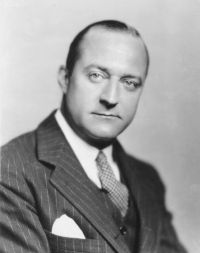
Henry Hazlitt

Henry Hazlitt

Summary

Portrait of Henry Hazlitt Henry Hazlitt Thinking as a Science

Everybody will admit the necessity for thinking—in the abstract. But how do we regard it in the concrete? When we see a man reading a good book, we think of him as educating himself. When we perceive a man without a book, even though we may happen to know that he is engaged in reflection, we do not look upon him as educating himself, though we may regard him as intelligent. In short, our habitual idea of thought is that it is a process of reviewing what we already know, but not of adding anything to our knowledge.
Source: Gutenberg

Portrait of Henry Hazlitt Henry Hazlitt Thinking as a Science

For not only is it harmful to fear to change an opinion which we have entertained, it is even harmful at times to fear to hold simultaneously two opinions incongruous with one another. If a thought springs up in your mind, and you come to see after a time that it is inconsistent with another thought, do not immediately try to throw out one or the other. Instead, think the new thought out in all its bearings and implications, just as if you had never had the first. Perhaps follow the same practice with the first idea. By and by one will reveal its falsity and the other its truth.
Source: Gutenberg

Portrait of Henry Hazlitt Henry Hazlitt Thinking as a Science

The philosopher Democritus put out his eyes so that, ceasing to read, he might think. We are not going to follow his example. But we can readily sympathize with him when we think of the many learned men who have read themselves into dreamy stupidity; men who know what everybody else thought, but who never have any thoughts of their own. We must admit that the arguments of these cranks are at least good medicine for the prevalent belief that the more a man reads the more he will know and the better thinker he will become.
Learning to think by reading is like learning to draw by tracing.
Source: Gutenberg

Get perspective with Kwize: daily news enlightened by great literature