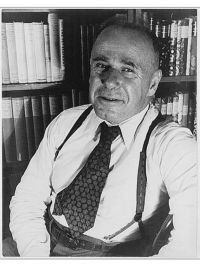
Hutchins Hapgood

Hutchins Hapgood

Summary

Portrait of Hutchins Hapgood Hutchins Hapgood An Anarchist Woman

A born stumbler in this world, I naturally lurched up against society—but, as often happens I have lost the thread of my thought: my thoughts, at the critical moment, frequently desert me, as my family did; they seem to carry on an alluring flirtation, and when I think them near they suddenly wave me from the distance. But, like a lover, I will follow on—follow on to platonic intercourse with my real mistress, the proletarian. And soul there is there. I have met as fathomless spirits among the workers as one will meet with anywhere. Art never has fathomed them, and may never be able to do so.
Source: Gutenberg

Portrait of Hutchins Hapgood Hutchins Hapgood An Anarchist Woman

I saw Terry again as I had seen him first, with the glamour of ardent love, the love that overleaps all barriers and, if only for an instant, stands face to face with love, unhesitating, tumultuous, and triumphant. The memory of even one perfect moment can never leave us, even if life be ever so dark and harsh and bitter, there will always be that single ray of light to illumine the darkness, and keep our steps from utter and complete stumbling.
Source: Gutenberg

Portrait of Hutchins Hapgood Hutchins Hapgood An Anarchist Woman

Often, after tossing restlessly on our pillows, when no sleep would come 'to weight our eyelids down,' the rest of the night would be spent in reciting poetry, the inevitable cigarette in one hand, the other gesticulating in the most fanciful and fervid manner. He would recite in passionate whispers—so as not to awaken Katie—for hours at a time, poems from Shakespeare to Shelley, and Verlaine to Whitman, poems tender and sweet, bitter and ironical and revolutionary, just as the mood suited him. His feeling for poetry and nature seemed to grow as his hope for human society grew less.
Source: Gutenberg

Get perspective with Kwize: daily news enlightened by great literature