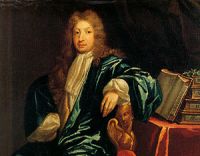
John Dryden

John Dryden

Summary

Portrait of John Dryden John Dryden The Works of Virgil (1709)

Virgil had consider'd, that the greatest Virtues of Augustus consisted in the perfect Art of Governing his People; which caus'd him to Reign for more than Forty Years in great Felicity. He consider'd that his Emperor was Valiant, Civil, Popular, Eloquent, Politick, and Religious: he has given all these Qualities to Æneas. But knowing that Piety alone comprehends the whole Duty of Man towards the Gods, towards his Country, and towards his Relations; he judg'd, that this ought to be his first Character, whom he would set for a Pattern of Perfection.
Source: Wikisource

Portrait of John Dryden John Dryden The Works of Virgil (1709)

If the Design be good, and the Draught be true, the Colouring is the first Beauty that strikes the Eye. Spencer and Milton are the nearest in English, to Virgil and Horace in the Latin; and I have endeavour'd to form my Stile by imitating their Masters. I will farther own to you, my Lord, that my chief Ambition is to please those Readers who have discernment enough to prefer Virgil before any other Poet in the Latin Tongue. Such Spirits as he desir'd to please, such wou'd I chuse for my Judges, and wou'd stand or fall by them alone.
Source: Wikisource

Portrait of John Dryden John Dryden The Works of Virgil (1709)

And besides, what Virtue is there in a Tragedy, which is not contain'd in an Epick Poem? Where Pride is humbled, Vertue rewarded, and Vice punish'd; and those more amply treated, than the narrowness of the Drama can admit? The shining Quality of an Epick Heroe, his Magnanimity, his Constancy, his Patience, his Piety, or whatever Characteristical Virtue his Poet gives him, raises first our Admiration: We are naturally prone to imitate what we admire: And frequent Acts produce a habit.
Source: Wikisource

Get perspective with Kwize: daily news enlightened by great literature