Summary

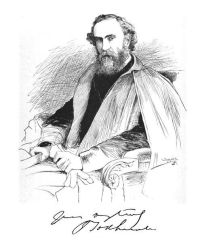
Portrait of John Todhunter John Todhunter The Black Cat: A Play in Three Acts

Denham.
(listens for a while, then starts up) He had tears in his eyes when he kissed me. Poor Arthur! he thinks we are going to patch it up, I suppose. I am to live on pity—a man's pity, more akin to contempt than to love. Why should he love me? I was not born to be loved, not made to be loved. And yet I wanted love so much. I wanted all or nothing, and I have got pity—pity that puts you in a madhouse, and comfortably leaves you to rot! Oh, my God! is this madness—this horror of darkness that seems pressing on my brain? (A knock at the door.) What's that? Come in! (Enter Jane with tea.)
Source: Gutenberg

Portrait of John Todhunter John Todhunter The Black Cat: A Play in Three Acts

But what is a good play? The enthusiastic critic has a ready answer: "The play that succeeds, that has a long run, that has money in it!" I accept the answer for what it is worth. This potentiality of money is, like "literature," an added grace: and it certainly, in a sense, marks the survival of the fittest. But there are other standards in the great workshop of the artist, Nature. Even the plant or play that lives but a short time may cast its seed into the soil, or imagination, of its day, and, like Banquo, beget a royal race, though not itself a king.
Source: Gutenberg

Portrait of John Todhunter John Todhunter The Black Cat: A Play in Three Acts

The play will make the actor, not the actor the play; to the great benefit of both play and actor.
But why be so serious over an art whose end is only to amuse? To amuse? Yes; but we are not all equally amused by the same things. There may be forms of humour which tickle some people more exquisitely than even that magnificent making of tea in an old gentleman's hat, which convulses the Charley's Aunt audience. And if amusement be the object of the drama, we must take the word in an extended sense.
Source: Gutenberg

Get perspective with Kwize: daily news enlightened by great literature