Summary

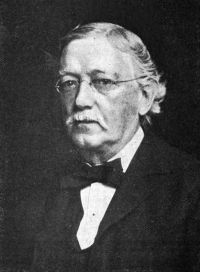
Portrait of W. J. Rolfe W. J. Rolfe Shakespeare the Boy

Much of the recreation, as of the education, of William Shakespeare was in the fields. "He is rarely a descriptive poet, distinctively so called; but images of mead and grove, of dale and upland, of forest depths, of quiet walks by gentle rivers,—reflections of his own native scenery,—spread themselves without an effort over all his writings. All the occupations of a rural life are glanced at or embodied in his characters.
Source: Gutenberg

Portrait of W. J. Rolfe W. J. Rolfe Shakespeare the Boy

For commonly, many schoolmasters—some, as I have seen, more, as I have heard tell—be of so crooked a nature, as, when they meet with a hard-witted scholar, they rather break him than bow him, rather mar him than mend him. For when the schoolmaster is angry with some other matter, then will he soonest fall to beat his scholar; and though he himself should be punished for his folly, yet must he beat some scholar for his pleasure, though there be no cause for him to do so, nor yet fault in the scholar to deserve so.
Source: Gutenberg

Portrait of W. J. Rolfe W. J. Rolfe Shakespeare the Boy

J. R. Wise, in his Shakespeare, His Birthplace and its Neighbourhood, says: "Take up what play you will, and you will find glimpses of the scenery round Stratford. His maidens ever sing of 'blue-veined violets,' and 'daisies pied,' and 'pansies that are for thoughts,' and 'ladies'-smocks all silver-white,' that still stud the meadows of the Avon.... I do not think it is any exaggeration to say that nowhere are meadows so full of beauty as those round Stratford.
Source: Gutenberg

Get perspective with Kwize: daily news enlightened by great literature