A Dictionary of the English Language

Definition and stakes

James Augustus Henry Murray,  The Evolution of English Lexicography (1900)

“ For, the English Dictionary, like the English Constitution, is the creation of no one man, and of no one age; it is a growth that has slowly developed itself adown the ages. Its beginnings lie far back in times almost prehistoric. And these beginnings themselves, although the English Dictionary of to-day is lineally developed from them, were neither Dictionaries, nor even English. As to their language, they were in the first place and principally Latin: as to their substance, they consisted, in large part at least, of glosses. ”
Source: Wikisource

Anonymous,  Outline of the history of the English language and literature

“ Most of the words in our English language are not English. There are more Latin words in our tongue than there are English. But this statement is true only of our words as we find them in the dictionary. The words which we use every day—the language of the mouth—is almost entirely English. The fixed vocabulary—the vocabulary printed in the dictionary—is more Latin than English; the moving vocabulary—the words which are daily spoken—is English. ”
Source: Gutenberg

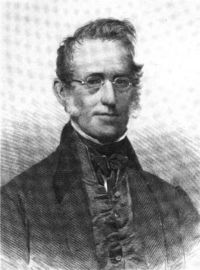
Portrait of Samuel Johnson Samuel Johnson,  Preface to a Dictionary of the English Language

“ The etymology, so far as it is yet known, was easily found in the volumes where it is particularly and professedly delivered; and, by proper attention to the rules of derivation, the orthography was soon adjusted. But to COLLECT the WORDS of our language was a task of greater difficulty: the deficiency of dictionaries was immediately apparent; and when they were exhausted, what was yet wanting must be sought by fortuitous and unguided excursions into books, and gleaned as industry should find, or chance should offer it, in the boundless chaos of a living speech. ”
Source: Gutenberg

Get perspective with Kwize: daily news enlightened by great literature