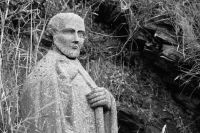
Aetius of Amida

Definition and stakes

Albert H. Buck The growth of medicine from the earliest times to about 1800 (1917)

Aëtius.—Aëtius was a native of Amida, in Mesopotamia, and he lived during the early part of the sixth century A. D., under the Emperor Justinian I. He studied medicine at Alexandria and then settled in Constantinople, where he was appointed to the double office of private physician to the emperor and commanding officer of his body-guard (Comes obsequii) ,—an arrangement which made it practicable for the emperor to have his physician near his person on all possible occasions.
Source: Gutenberg

Project Gutenberg The Project Gutenberg Encyclopedia…

Its main thought is that the Homousia, i.e. the doctrine that the Son (therefore the Begotten) is essentially God, is self-contradictory, since the idea of unbegottenness is just that which constitutes the nature of God.
See A. Harnack, History of Dogma, vol. iv. passim.
AETIUS, a Greek physician, born at Amida in Mesopotamia, flourished at the beginning of the 6th century A.D. He studied at Alexandria, and became court physician at Byzantium and comes obsequii, one of the chief officers of the imperial household.
Source: Gutenberg

Philostorgius Ecclesiastical history

Chapter 2 The emperor, having learned from Acacius that Aetius was treated by Auxentius, bishop of Mopsuestia, with all possible care and kindness, ordered him to be removed to Ambdala, that he might there bring his life to a miserable close on account of the fierce and savage character of its inhabitants. And when, on account of the heat, that place was infected with a very terrible pestilence, this impious forger of lies declares that Aetius appeased the Divinity and warded off these calamities, and was treated in consequence by the barbarians with the greatest kindness and respect.
Source: Wikisource

Get perspective with Kwize: daily news enlightened by great literature