
“ SOCRATES: Then, as this is your wish, I will describe the leaders; for there is no use in talking about the inferior sort. In the first place, the lords of philosophy have never, from their youth upwards, known their way to the Agora, or the dicastery, or the council, or any other political assembly; they neither see nor hear the laws or decrees, as they are called, of the state written or recited; the eagerness of political societies in the attainment of offices—clubs, and banquets, and revels, and singing-maidens,—do not enter even into their dreams. ”
Agora
Definition and stakes
The agora, a central public space in ancient Greek city-states, functioned as a hub for political, commercial, social, and religious activities, exemplified by the Athenian agora. Thinkers such as Johann Gottlieb Fichte and Woodrow Wilson examined themes of transformation and advancement, highlighting the agora’s symbolic function as a convergence point for ideas and evolution.
ʻAbdu'l-Bahá discussed renewal and the emergence of a new age, while Francis William Lauderdale Adams described the present as a threshold between past and future. These viewpoints emphasize the agora’s lasting metaphor as a location where human efforts intersect, connecting historical continuity with the vitality of societal development.
Quotes about “agora”
Viscount James Bryce Bryce, South America: Observations and Impressions
“ In the more progressive states, conditions are changing as fast as anywhere else in this changeful age. Here, as everywhere, the Present is the child of the Past, but the features of the child change as it grows up, and all we know of the future is that it will be unlike the past. ”
 Woodrow Wilson,
The New Freedom
(1913)
Woodrow Wilson,
The New Freedom
(1913)
“ We think of the future, not the past, as the more glorious time in comparison with which the present is nothing. Progress, development,—those are modern words. The modern idea is to leave the past and press onward to something new. ”
 Francis William Lauderdale Adams,
Essays in Modernity: Criticisms and Dialogues
(1899)
Francis William Lauderdale Adams,
Essays in Modernity: Criticisms and Dialogues
(1899)
“ The names of these others are the foremost names of our time, and we instinctively recognise the fact that all of them, those who went before and those who followed after, form but one company. They do. They form the company of the Age of Transition. They close the epoch. They pass the lamp of life to the New Race. They pause on the threshold of the New World. ”
 Johann Gottlieb Fichte,
Characteristics of the Present Age
(1806)
Johann Gottlieb Fichte,
Characteristics of the Present Age
(1806)
“ In the preceding Lectures we have delineated the Present Age as a necessary part of the great World-Plan on which the Earthly Life of our Race is arranged, and have endeavoured to disclose its secret significance; we have sought to understand the phenomena of the Present by means of this Idea, to bring them forth as the necessary results of the Past, and to predict their immediate consequences in the Future;—and if we have succeeded in this our undertaking, we have then understood our Age. We have been engaged in these contemplations without thought of ourselves or of our own position. ”
Alphonse Courlander, Mightier than the Sword
“ The closing years of the nineties had been years of preparation and development—years of broadening minds and new ideas, until quite suddenly, it seemed, the century turned the corner, and yesterday became old-fashioned in a day, and all eyes were fixed on the glorious sunrise of the twentieth century—the wonderful century. ”
Edmondo De Amicis, Stories by Foreign Authors (1898)
“ Let us talk of our college days, of our travels, of war, of soldiers, and of Italy! XII. We old classmates will many of us doubtless live to see the twentieth century. Strange thought! I know, of course, that the transition from nineteen hundred to nineteen hundred and one will seem as natural as that from ninety-nine to a hundred, or from this year to next. And yet it seems to me that to see the first dawn of the new century will be like reaching the summit of some high mountain, and looking out over new countries and new horizons. ”
 ʻAbdu'l-Bahá,
Selections from the writings of ‘Abdu'l-Bahá
ʻAbdu'l-Bahá,
Selections from the writings of ‘Abdu'l-Bahá
“ Humanity hath taken on new life. The autumn hath gone by, and the reviving spring is here. All things are now made new. Arts and industries have been reborn, there are new discoveries in science, and there are new inventions; even the details of human affairs, such as dress and personal effects—even weapons—all these have likewise been renewed. The laws and procedures of every government have been revised. Renewal is the order of the day.And all this newness hath its source in the fresh outpourings of wondrous grace and favour from the Lord of the Kingdom, which have renewed the world. ”
W. L. Courtney, Armageddon—And After
“ The dawn of a new era must be plenarily accepted as a wonderful opportunity for reform. If viewed in any other spirit, the ix splendours of the morning will soon give way before the obstinate clouds hanging on the horizon. ”
 Louise Imogen Guiney,
Goose-Quill Papers
Louise Imogen Guiney,
Goose-Quill Papers
“ These pictures of old social and political conditions are especially suggestive as reminding us that a single life, only lately closed, linked us with days, events and men that were a part of our early history and appear remote because of the multitude of changes that have transformed society in the interval."—Boston Journal. ”
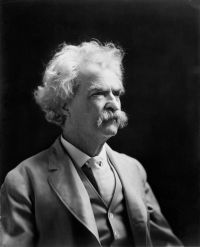 Mark Twain,
The Enemy Conquered; or, Love Triumphant
Mark Twain,
The Enemy Conquered; or, Love Triumphant
“ A new era is moving gently onward, old things are rapidly passing away; old superstitions, old prejudices, and old notions are now bidding farewell to their old associates and companions, and giving way to one whose wings are plumed with the light of heaven and tinged by the dews of the morning. ”
 Orison Swett Marden,
Architects of Fate; Or, Steps to Success and Power
Orison Swett Marden,
Architects of Fate; Or, Steps to Success and Power
“ These notes may appear a thousand years hence, reproduced in our descendants, in all their beautiful or terrible detail. All the ages that have been are rounded up into the small space we call "To-day." Every life spans all that precedes it. To-day is a book which contains everything that has transpired in the world up to the present moment. The millions of the past whose ashes have mingled with the dust for centuries still live in their destinies through the laws of heredity. ”
Newell Dwight Hillis, A Man's Value to Society: Studies in Self Culture and Character
“ It is the necessity of life for man to journey backward into the past for food and seed with which to sow the unconquered future. For each individual yesterday holds the beginnings of art and architecture. Yesterday holds the beginnings of reform and philanthropy. Yesterday contains the rise and victory of freedom. Yesterday holds the first schoolroom and college and library. Yesterday holds the cross and all its victories over ignorance and sin. Yesterday is a river pouring its rich floods forward, lending majesty and momentum to all man's enterprises. ”
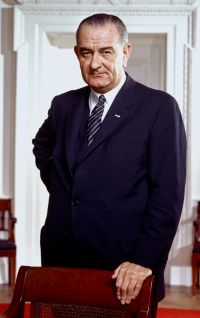 Lyndon Baines Johnson,
Lyndon B. Johnson's Inaugural Address
(1965)
Lyndon Baines Johnson,
Lyndon B. Johnson's Inaugural Address
(1965)
“ The next man to stand here will look out on a scene different from our own, because ours is a time of change— rapid and fantastic change bearing the secrets of nature, multiplying the nations, placing in uncertain hands new weapons for mastery and destruction, shaking old values, and uprooting old ways. ”
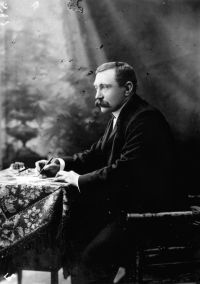 George Essex Evans,
The Secret Key and Other Verses…
(1906)
George Essex Evans,
The Secret Key and Other Verses…
(1906)
“ From the forelands of the Future they are waiting our reply! We can face the roughest weather If we only hold together, Marching forward to the Future, marching shoulder- firm together, For the Nation yet to be. All the greyness of the dawning, all the mists are over-past, In the glory of the morning we shall see Her face at last. ”
Alphonse Courlander, Mightier than the Sword
“ People, you remember, played with the fantasy of beginning a brand-new century as if it were a new toy. Nobody who was living could remember the birth of the last century. It was a new emotion for everyone. ”
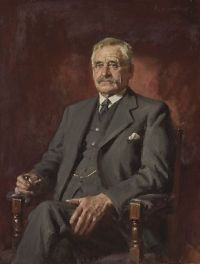 A. B. Paterson,
Rio Grande's Last Race, and Other Verses
A. B. Paterson,
Rio Grande's Last Race, and Other Verses
“ But times are changed, and changes rung From old to new — the olden days, The old bush life and all its ways Are passing from us all unsung. The freedom, and the hopeful sense Of toil that brought due recompense, Of room for all, has passed away, And lies forgotten with the dead. ”
 Fredrika Bremer,
The Homes of the New World
(1853)
Fredrika Bremer,
The Homes of the New World
(1853)
“ And when people ask me what the people of the New World possess preferably to the Old, I reply, with the impression of that which I have seen and passed through in America fresh in my soul;—a warmer heart's pulse; a more energetic, a more vigorous youthful life. ”
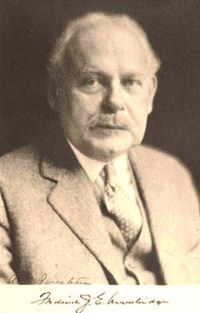 Frederick James Eugene Woodbridge,
The Purpose of History
Frederick James Eugene Woodbridge,
The Purpose of History
“ But it is quite clear that to-day is neither past nor future, that it is neither yesterday nor to-morrow, and that if we go anywhere we must start to-day. When Sunday comes, Saturday will be yesterday. But note now the strange situation into which we have fallen—only in the future is this day ever in the past! And that is true of every day in the world's history. It becomes a past day only in its own future. ”
 Algernon Blackwood,
Julius LeVallon: An Episode
Algernon Blackwood,
Julius LeVallon: An Episode
“ The entire Present, the stage at which humanity found itself to-day, was but a moment, and values worshipped now, and by the majority rightly worshipped, would pass away, and be replaced by something that would seem entirely new, yet would be in reality not discovery but recovery. ”
 Carl Schurz,
Speeches, correspondence and political papers of Carl Schurz
(1913)
Carl Schurz,
Speeches, correspondence and political papers of Carl Schurz
(1913)
“ When I come in touch with this atmosphere of political activity, I feel the old fire of 1848 coursing in my veins as fresh and young as ever. I feel that the true vocation of my life lies where my endeavor will reach out to universal problems. ”
James W. Lee, The Making of a Man
“ TRUTH. “A century is a formula; an epoch is an expressed thought. One such thought-expressed civilization passes to another. The centuries are the phrases of civilization; what she says here she does not repeat there. But these mysterious phrases are linked together: logic—the logos—is within them, and their series constitutes progress. In all these, phrase expressions of a single thought, the divine thought, we are slowly deciphering the word fraternity.“All light is at some point condensed into a flame; likewise every epoch is condensed in a man. ”
Georgiana Hill, Women in English Life from Mediæval to Modern Times…
“ It was the beginning of a gradual transformation which with every century, with every generation, takes some new form, and is sometimes called progress, sometimes revolution, but which moves on with the same relentless persistence as the laws that govern the earth. ”
Johann Gottlieb Fichte,
Addresses to the German Nation…
(1922)
“ He who has once undertaken to interpret his own age must make his interpretation keep pace with the progress of that age, if progress there be. It is, therefore, my duty to acknowledge as past what has ceased to be the present, before the same audience to whom I characterized it as the present. ”
 Edward Bellamy,
Looking Backward From 2000 to 1887…
(1888)
Edward Bellamy,
Looking Backward From 2000 to 1887…
(1888)
“ The almost universal theme of the writers and orators who have celebrated this bimillennial epoch has been the future rather than the past, not the advance that has been made, but the progress that shall be made, ever onward and upward, till the race shall achieve its ineffable destiny. ”
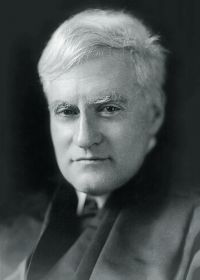 Benjamin Nathan Cardozo,
The Nature of the Judicial Process
(1921)
Benjamin Nathan Cardozo,
The Nature of the Judicial Process
(1921)
“ Nowadays we may see the office of historical research as that of explaining, and therefore lightening, the pressure that the past must exercise upon the present, and the present upon the future. Today we study the day before yesterday, in order that yesterday may not paralyze today, and today may not paralyze tomorrow. ”
P. L. Jacob, Military and religious life in the Middle Ages and at the period of the Renaissance (1870)
“ The emotions of the present may incline us to look back regretfully upon that past which reminds us of so much that is great and noble, in spite of its many and inevitable drawbacks, and which, by showing us the origin of modern society, by revealing to us the manner of its birth and its onward progress, may give us the key to its present critical condition when a profound and universal transformation seems about to take place. ”
 John Timbs,
Knowledge for the Time
John Timbs,
Knowledge for the Time
“ That the Past is the Guide for the Present is thus argued:—Every political treatise referring to events which have engrossed the attention of the day, either as modifications or as changes of our social system, must be valuable in later years. ”
Sabin Hough, The Judgment Day (1849)
“ The extraordinary revolutions that are now taking place in the political and social relations of the human family, as well as those discoveries and improvements which are continually and very rapidly advancing our natural comforts and enjoyments, are constantly spoken of as the "signs of the times;" and are regarded as portending some much greater revolution, about to break forth from the spiritual world. And yet every reflecting man ought to know that signs are always effects. ”
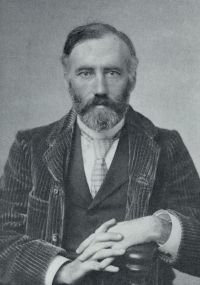 William Quan Judge,
The Ocean of Theosophy
William Quan Judge,
The Ocean of Theosophy
“ And at the present time we are in a cycle of transition, when, as a transition period should indicate, everything in philosophy, religion, and society is changing. In a transition period the full and complete figures and rules respecting cycles are not given out to a generation which elevates money above all thoughts and scoffs at the spiritual view of man and nature. ”
John Wilson, Recreations of Christopher North…
“ Why, we should dearly love the late revolution we have seen below—it is no longer called Reform—were it to fling up to free light from fettered darkness a few fine bold original spirits, who might give the whole world a new character, and a more majestic aspect to crouching life. ”
Samuel Dill, Roman Society from Nero to Marcus Aurelius
“ It should be a crisis and turning-point in the life of humanity, a period pregnant with momentous issues, a period in which the old order and the new are contending for mastery, or in which the old is melting into the new. ”
 Walter Scott,
Waverley; Or, 'Tis Sixty Years Since
Walter Scott,
Waverley; Or, 'Tis Sixty Years Since
“ But the change, though steadily and rapidly progressive, has nevertheless been gradual; and, like those who drift down the stream of a deep and smooth river, we are not aware of the progress we have made until we fix our eye on the now distant point from which we have been drifted. ”
 Lady Morgan,
The Missionary: An Indian Tale…
Lady Morgan,
The Missionary: An Indian Tale…
“ Time rolled on, and the majestic order of nature, uninterrupted in its harmonious course, finely contrasted the rapid vicissitudes of human events, and the countless changes in human institutions! In the short space of twenty years, the mighty had fallen, and the lowly were elevated ”
Charles Morris, Famous Men and Great Events of the Nineteenth Century
“ We have hitherto dealt solely with the progress of the nineteenth century. Now, standing like Bellamy at the dawn of the twentieth, it may be well to take a long look ahead, and strive to trace some stages of the probable progress of the coming time, looking forward from this summit of the ages and stating what this outlook into the dim and distant future brings to our eyes. ”
 George William Russell,
The National Being: Some Thoughts on an Irish Polity
George William Russell,
The National Being: Some Thoughts on an Irish Polity
“ Such light from heaven is vouchsafed to individuals, but never to nations, who progress by an orderly evolution in society. Though the heart in us cries out continually, "Oh, hurry, hurry to the Golden Age," though we think of revolutions, we know that the patient marshalling of human forces is wisdom. ”
J. D. Buck, The New Avatar and The Destiny of the Soul
“ In tracing analogies through the history of the past, the conditions, premonitory, present, and subsequent to great world-movements have often been referred to.Nothing is more common or more patent than the oft-repeated saying, “This is the age of science.” 211 Any great movement that undertakes at the present day to deal with the deeper problems of individual and social life, must fit in and conform to the “spirit of the present age.” ”
Johann Gottlieb Fichte,
Addresses to the German Nation…
(1922)
“ Truly the prophecy of a new life in such forms will probably seem strange to our age, which would scarcely have the courage to take this promise to itself, if it were to look solely at the tremendous difference between its own prevailing opinions on these matters and those which have been expressed as principles of the new era. ”
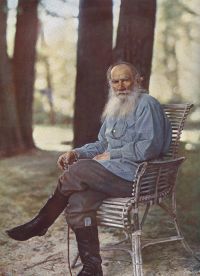 Leo Tolstoy,
A History of Yesterday
(1949)
Leo Tolstoy,
A History of Yesterday
(1949)
“ I am writing a history of yesterday not because yesterday was extraordinary in any way, for it might rather be called ordinary, but because I have long wished to trace the intimate side of life through an entire day. Only God knows how many diverse and diverting impressions, together with the thoughts awakened by them, occur in a single day. ”
Ardelia Maria Cotton Barton, Autumn Leaves (1908)
“ It will to me unfold. [Pg 32] “O man why seekest thou to know The future, or the past? The present is enough for you, If not with clouds o’er cast.” The mountains seemed to pity me, The clouds shed showers of tears, The sun looked down in reverence, And said: “Allay your fears,” “For there’s a power that rules mankind, E’er has and ever will. The future, and the past, are His, Are governed by His will.” ”
William Douglass, Sermons Preached in the African Protestant Episcopal Church of St… (1854)
“ Another point worthy of our consideration is, that time is as uncertain as it is short. The present moment is all that we can safely calculate upon. The future is veiled in the bosom of the great Eternal. ”
Edward Bannerman Ramsay, Reminiscences of Scottish Life & Character
“ Now when we linger over these old stories, we seem to live at another period, and in such reminiscences we converse with a generation different from our own. Changes are still going on around us. They have been going on for some time past. The changes are less striking as society advances, and we find fewer alterations for us to notice. ”
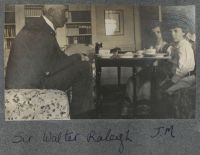 Sir Walter Alexander Raleigh,
The War in the Air; Vol. 1
Sir Walter Alexander Raleigh,
The War in the Air; Vol. 1
“ When in the light of the present we look back on the past our eyes are opened, and we see many things that were invisible to contemporaries. We are able, for the first time, to pay homage to the pioneers, who saw the promised kingdom, but did not enter it. ”
