Altai Mountains

Definition and stakes

Various,  The New Gresham Encyclopedia. A to Amide

“ The area covered by perpetual snow is very considerable, and glaciers occupy a large area. In the high lands the winter is very severe, but on the whole the climate is comparatively mild and is also healthy. The flora of the Altai Mountains greatly resembles that of the Alps, about five-sixths of the latter being found here. The mountain forests are composed of birch, alder, aspen, fir, larch, stone-pine, &c. The wild sheep has here its native home, and several kinds of deer are found. The Altai is exceedingly rich in minerals, including gold, silver, copper, and iron. ”
Source: Gutenberg

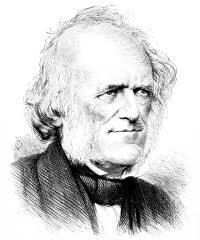
Portrait of Arthur Mangin Arthur Mangin,  The Desert World

“ The daring traveller who beards the Winter-king in his own realms meets no more with massive and lofty mountain-crests; a few only of the great chains of Europe and Asia—here the Scandinavian Alps, there the Oural Mountains; still further, at the easternmost extremity of Asia, some scattered summits, which we may consider as belonging to the elevation of the Altai, prolong even to the Arctic shores their cantled and snow-shrouded peaks. ”
Source: Gutenberg

Alexander von Humboldt,  Aspects of nature, in different lands and different climates… (1849)

“ The great mountain system of the Altai, (the “gold mountains” of Menander of Byzantium, an historical writer who lived as early as the 7th century, the Altaï-alin of the Moguls, and the Kin-schan of the Chinese) , forms the southern boundary of the great Siberian lowlands; and running between 50° and 521⁄2° of north latitude, extends from the rich silver mines of the Snake Mountains, and the confluence of the Uba and the Irtysh, to the meridian of Lake Baikal. ”
Source: Gutenberg

Get perspective with Kwize: daily news enlightened by great literature