Ancon

Definition and stakes

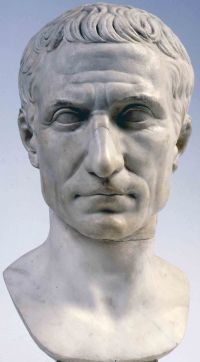
Portrait of Julius Caesar Julius Caesar,  "De Bello Gallico" and Other Commentaries

“ Ancibarii, or Ansivarii, an ancient people of Lower Germany, of and about the town of Ansestaet, or Amslim
Anc [=o] na, Ancona, a city of Italy, on the coast of Pisenum. It is supposed to derive its name from the Greek word [Greek: agkon] , an angle or elbow, on account of the angular form of the promontory on which it is built. The foundation of Ancona is ascribed by Strabo to some Syracusans, who were fleeing from the tyranny of Dionysius. Livy speaks of it as a naval station of great importance in the wars of Rome with the Illyrians.
”

Source: Gutenberg

Mrs. G. Gretton,  The Englishwoman in Italy

“ Little as the Anconitans are given to locomotion, I never met an instance of one who had not visited the shrine at least once in his or her life, whilst a few make it a point of conscience to repair thither every year. The distance from Ancona, by the high-road, is twenty miles—a journey of five hours, in that country of [197] steep hills and slow coaches; but travellers are generally disposed to overlook the tedium of the way in their admiration of the scenery it discloses. ”
Source: Gutenberg

Olave M. Potter,  A Little Pilgrimage in Italy

“ It is a granary of rare and interesting Byzantine fragments, and its choir is graced by ten of the marble columns which once stood in the temple of Aphrodite.
Ancona of to-day is a garden where the beautiful flowers of an ancient architecture are still flourishing [194] among the energetic weeds and herbs of everyday life. Between the two horns of her crescent bay, Monte Astagno, crowned by the Spanish bastions of the Fortezza, and Monte Guasco, which enthrones the lovely church of San Ciriaco, there is a network of streets.
”
Source: Gutenberg

Get perspective with Kwize: daily news enlightened by great literature