Tommaso Campanella

Definition and stakes

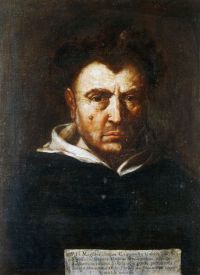
Portrait of Tommaso Campanella Tommaso Campanella The Sonnets of Michael Angelo Buonarroti and Tommaso Campanella…

Something must be said to justify the issue of poems so dissimilar in a single volume. Michael Angelo and Campanella represent widely sundered, though almost contemporaneous, moments in the evolution of the Italian genius. Michael Angelo was essentially an artist, living in the prime of the Renaissance. Campanella was a philosopher, born when the Counter-Reformation was doing all it could to blight the free thought of the sixteenth century; and when the modern spirit of exact enquiry, in a few philosophical martyrs, was opening a new stage for European science.
Source: Gutenberg

Portrait of Tommaso Campanella Tommaso Campanella The Sonnets of Michael Angelo Buonarroti and Tommaso Campanella…

Telesio, says Bacon, was the prince of the novi homines, or inaugurators of modern thought. It was natural that Campanella should be drawn towards this great man. But the superiors of his convent prevented his forming the acquaintance of Telesio; and though the two men dwelt in the same city of Cosenza, Campanella never knew the teacher he admired so passionately. Only when the old man died and his body was exposed in the church before burial, did the neophyte of his philosophy approach the bier, and pray beside it, and place poems upon the dead.
Source: Gutenberg

Portrait of Tommaso Campanella Tommaso Campanella The Sonnets of Michael Angelo Buonarroti and Tommaso Campanella…

Between Dante and Alfieri no Italian poet except Michael Angelo expressed so much deep thought and feeling in phrases so terse, and with originality of style so daring; and even Michael Angelo is monotonous in the range of his ideas and uniform in his diction, when compared with the indescribable violence and vigour of Campanella. Campanella borrows little by way of simile or illustration from the outer world, and he never falls into the commonplaces of poetic phraseology. His poems exhibit the exact opposite of the Petrarchistic or the Marinistic mannerism.
Source: Gutenberg

Get perspective with Kwize: daily news enlightened by great literature