Summary

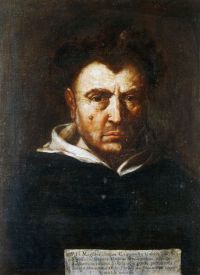
Portrait of Tommaso Campanella Tommaso Campanella The Sonnets of Michael Angelo Buonarroti and Tommaso Campanella…

Each sonnet seems to have been wrenched alive and palpitating from the poet's heart. There is no smoothness, no gradual unfolding of a theme, no rhetorical exposition, no fanciful embroidery, no sweetness of melodic cadence, in his masculine art of poetry. Brusque, rough, violent in transition, leaping from the sublime to the ridiculous—his poems owe their elevation to the intensity of their feeling, the nobleness and condensation of their thought, the energy and audacity of their expression, their brevity, sincerity, and weight of sentiment. Campanella had an essentially combative intellect.
Source: Gutenberg

Portrait of Tommaso Campanella Tommaso Campanella The Sonnets of Michael Angelo Buonarroti and Tommaso Campanella…

We yet may hope to see mild Saturn's reign;
For all things that were buried live again,
By time's revolving cycle forward rolled.
Yet this the fox, the wolf, the crow, made bold
By fraud and perfidy, deny—in vain:
For God that rules, the signs in heaven, the train
Of prophets, and all hearts this faith uphold.
If thine and mine were banished in good sooth
From honour, pleasure, and utility,
The world would turn, I ween, to Paradise;
Blind love to modest love with open eyes;
Cunning and ignorance to living truth
Source: Gutenberg

Portrait of Tommaso Campanella Tommaso Campanella The Sonnets of Michael Angelo Buonarroti and Tommaso Campanella…

He was both a poet and a philosopher militant. He stood alone, making war upon the authority of Aristotle in science, of Machiavelli in state-craft, and of Petrarch in art, taking the fortresses of phrase by storm, and subduing the hardest material of philosophy to the tyranny of his rhymes. Plebeian saws, salient images, dry sentences of metaphysical speculation, logical summaries, and fiery tirades are hurled together— half crude and cindery scoriae, half molten metal and resplendent ore— from the volcano of his passionate mind.
Source: Gutenberg

Get perspective with Kwize: daily news enlightened by great literature