“ As the weary flyers sought the trees and fields for rest and food, overhead, against a crimson and gold dawn, passed the long-distance champion of the skies—the Arctic tern, with its snow-white breast, black head, curved wings, and forked tail. Nesting as far north as it can find land, only seven and a half degrees from the Pole, it flies eleven thousand miles to the Antarctic, and, ranging from pole to pole, sees more daylight than any other creature. For eight months of its year it never knows night, and during the other four has more daylight than dark. ”
Arctic tern
Definition and stakes
The theme of “Arctic tern” has been addressed by authors such as William Spiers Bruce, Thomas Coward, G. Hartwig, Julian W. Bilby and Agnes Deans Cameron. It is often associated with terms like nest, egg, bird, common and North.
Quotes about “Arctic tern”
 Frederick Charles Lincoln,
Migration of Birds (1950)
“ In North America the arctic tern breeds south in the interior to Great Slave Lake, and on the Atlantic coast to Massachusetts. After the young are grown the arctic terns disappear from their North American breeding grounds, and a few months later they may be found in the Antarctic region, 11,000 miles away. Until very recently the route followed by these hardy fliers was a complete mystery, for although a few scattered individuals have been noted south as far as Long Island, the species is otherwise practically unknown along the Atlantic coasts of North America and South America. ”
 Agnes Deans Cameron,
The New North
“ The Arctic tern hatches on its shores, laying its eggs in the beach gravel. The bird, with its slender body, deeply-forked tail, and shrilly-querulous voice, is everywhere in evidence. Does the whole family of lake birds show any more exquisite colour-scheme than the pearly plumage, small coral feet, carmine bill, and black cap of this tern? In a dell carpeted with silverweed and wild mustard, we come across a nest of our persisting friend, the chipping sparrow. ”
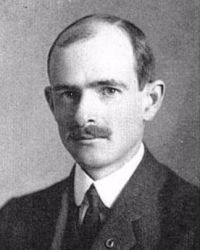
Related terms
Authors who wrote about “Arctic tern”
William Spiers BruceThomas CowardG. HartwigJulian W. BilbyAgnes Deans Cameron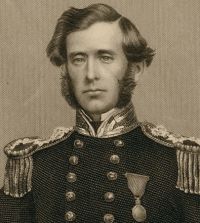 Sir Francis Leopold M'Clintock
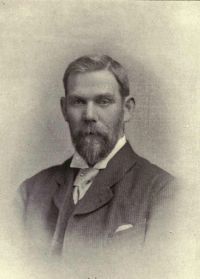 Charles DixonJulius PayerW. J. Gordon
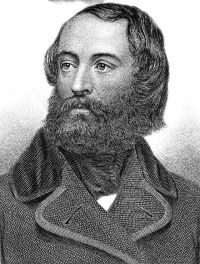 Elisha Kent Kane
 R. F. Scharff
 William Henry HudsonEdward L. Moss
 Robert E. PearyAnonymousFrederick Charles LincolnAlfred Newton
 Jules Verne
 T. Gilbert Pearson
 John James Audubon
Agnes Deans CameronSir Francis Leopold M'ClintockCharles DixonJulius PayerW. J. GordonElisha Kent KaneR. F. ScharffWilliam Henry HudsonEdward L. MossRobert E. PearyAnonymousFrederick Charles LincolnAlfred NewtonJules VerneT. Gilbert PearsonJohn James Audubon