“ All might have gone well with Aristæus had there not come for him the fateful day when he saw the beautiful Eurydice and to her lost his heart. She fled before the fiery protestations of his love, and trod upon the serpent whose bite brought her down to the Shades. The gods were angry with Aristæus, and as punishment they slew his bees. His hives stood empty and silent, and no more did “the murmuring of innumerable bees” drowse the ears of the herds who watched their flocks cropping the red clover and the asphodel of the meadows. ”
Aristaeus
Definition and stakes
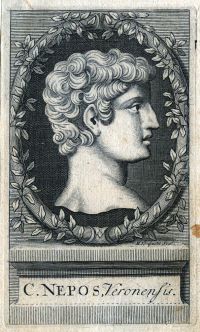
Aristaeus, a figure straddling myth and history in ancient Greece, exemplifies the interaction between divine power and human effort. Honored as the son of Apollo and Cyrene, he emerges in tales connected to Thessaly and Libya, while historical records, such as those by Plutarch and Cornelius Nepos, emphasize his role as a righteous Athenian leader.
Anatole France contrasts his miraculous healing with the logic of science, and encyclopedic sources outline the extent of his cult’s influence. From myth to moral model, Aristaeus illustrates the Greeks’ blending of the sacred and the civic, his influence persisting in literature and historical writing alike.
Quotes about “Aristaeus”
 Anatole France,
Thaïs
(1890)
Anatole France,
Thaïs
(1890)
“ Aristaeus shook his head. “It is very possible that he may cure certain diseases better than I can; such, for instance, as epilepsy, vulgarly called the divine malady, although all maladies are equally divine, for they all come from the gods. But the cause of this disease lies, partly, in the imagination, and you must confess, Lucius, that this monk, perched up on the head of a goddess, strikes the minds of the sick people more forcibly than I, bending over my mortars and phials in my laboratory, could ever do. There are forces, Lucius, infinitely more powerful than reason and science.” ”
Various, Encyclopaedia Britannica, 11th Edition…
“ Text: Boissonade (1822) ; Hercher, Epistolographi Graeci (1873) . English translations: Boyer (1701) ; Thomas Brown (1715) ; R.B. Sheridan and Halked (1771 and later) .ARISTAEUS, a divinity whose worship was widely spread throughout ancient Greece, but concerning whom the myths are somewhat obscure. The account most generally received connects him specially with Thessaly. Apollo carried off from Mount Pelion the nymph Cyrene, daughter or granddaughter of the river-god Peneus, and conveyed her to Libya, where she gave birth to Aristaeus. From this circumstance the town of Cyrene took its name. ”