Bartolomeo Sansovino

Definition and stakes

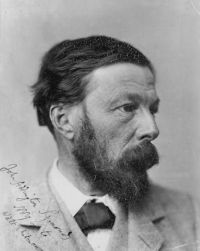
Portrait of John Addington Symonds John Addington Symonds Renaissance in Italy, Volume 3…

In all his work he subordinated sculpture to architecture, and his statuary is conceived in the bravura, manner of Renaissance paganism. Whatever may be the faults of Sansovino in both arts, it cannot be denied that he expressed, in a style peculiar to himself, the large voluptuous external life of Venice at a moment when this city was the Paris or the Corinth of Renaissance Europe. At the same time, the shallowness of Sansovino's inspiration as a sculptor is patent in his masterpieces of parade—the "Neptune" and the "Mars," guarding the Scala d'Oro.
Source: Gutenberg

Giorgio Vasari Lives of the Most Excellent Painters… (1850)

He was in like manner invited to Rome by Pope Paul III., who wished him to undertake the care of San Pietro, in place of Antonio da San Gallo, and Monsignore della Casa, then Legate at Venice, did his best to prevail on our artist to consent, but it was all in vain; he declared that he would not exchange his life in a Republic for that under an absolute Prince. King Philip II. of Spain, also, when on his way to Germany, conferred many marks of favour on Sansovino, whom he saw in Peschiera.
Source: Wikisource

Portrait of John Addington Symonds John Addington Symonds Renaissance in Italy, Volume 3…

Both the Bacchus and the Satyriscus at his side are triumphs of realism, irradiated and idealised by the sculptor's vivid sense of natural gladness. Considered as a restitution of the antique manner, this statue is decidedly superior to the "Bacchus" of Michael Angelo. While the mundane splendour of Venice gave body and fulness to Sansovino's paganism, he missed the self-restraint and purity of taste peculiar to the studious shades of Florence. In his style, both architectural and sculptural, the neo-pagan sensuality of Italy expanded all its bloom.
Source: Gutenberg

Get perspective with Kwize: daily news enlightened by great literature