“ Sir Charles, first and last a simple business man, having only one point of contact with their world, enjoyed—perhaps a trifle guiltily—his excursions into so sophisticated a set, feeling, no doubt, that in some new way for him he was "seeing life." ”
Charles the Simple
Definition and stakes
Charles the Simple (879–929), king of West Francia and Lotharingia, was a Carolingian monarch defined by political instability and clashes with the Vikings. Scholars such as Ierne L. Plunket portray him as a multifaceted leader, both a defender of justice and a man burdened by personal failings, while Charles Wagner highlights the significance of simplicity in human pursuits.
Alice Campbell depicts him as an individual striving to manage the complexities of society while grappling with a sense of remorse. These differing viewpoints emphasize his legacy as a ruler whose modesty existed alongside the difficulties of medieval leadership.
Quotes about “Charles the Simple”
Ierne L. Plunket, Europe in the Middle Ages
“ At another time we see in him the guardian of his people, the king who ‘wills that justice should be done’, but we recall a story such as that of the painted mouse, and instantly his simple, almost schoolboy, side becomes apparent. The ‘Great Charles’ was no saint but a Frank of the rough type of soldiers he led to battle, capable of cruelty as of kindness, hot-tempered, a lover of sport, strong perhaps where his ideals were at stake, but weak towards women, and an over-indulgent father, who let the intrigues of his daughters bring scandal on his court. ”
 Robert Browning,
Dramatic Romances
Robert Browning,
Dramatic Romances
“ His having played with the patriot in his youth, as the poem says, is quite possible, for Charles was brought up as a simple citizen in a public school, and one of his chief friends was Alberta Nota, a writer of liberal principles, whom he made his secretary. As indicated in the poem, Charles at first declared himself in sympathy, though in a somewhat lukewarm manner, with the rising led by Santa Rosa against Austrian domination in 1823, and upon the abdication of Victor Emanuel he became regent of Turin. ”
 Charles Wagner,
The Simple Life
Charles Wagner,
The Simple Life
“ If we meet it in the shape of a blade of wheat piercing the furrow; a bird brooding on its nest; a poor wounded beast, recovering itself, rising and continuing its way; a peasant ploughing and sowing a field that has been ravaged by flood or hail; a nation slowly repairing its losses and healing its wounds—under whatever guise of humanity or suffering it appears to us, let us salute it! ”
 Jacob Abbott,
History of King Charles the Second of England
Jacob Abbott,
History of King Charles the Second of England
“ Long negotiations and debates ensued, each party becoming more and more irritated against the other. At last, on one occasion, Charles lost his patience entirely, and made his escape into the mountains, in hopes to raise an army there among the clans of wild Highlanders, who, accustomed from infancy to the most implicit obedience to their chieftains, are always very loyal to their king. ”
Charles Wagner,
The Simple Life
“ Happy he who is able to reclaim himself, who finds the way back to simplicity.Good plain sense is not, as is often imagined, the innate possession of the first chance-comer, a mean and paltry equipment that has cost nothing to anyone. I would compare it to those old folk-songs, unfathered but deathless, which seem to have risen out of the very heart of the people. Good sense is a fund slowly and painfully accumulated by the labor of centuries. ”
Various, Graham's Magazine, Vol XXXIII, No…
“ This night he hies to her bower in a strange habit, and hopes to win her thence; but let him take heed that more eyes look not on him than the young bird's; she may escape, and he be unmasked.""Odds my life! my friend, I think thou knowest me," cried Charles, laughing, as he drew a purse from his belt."The stars proclaim thee England's king," replied the astrologer, as he bent his knee to the monarch.Charles satisfied himself by asking a few more questions, then threw the doctor his purse, and, bidding him come to the palace to receive another, he departed. ”
Lyndon Orr, Famous Affinities of History: The Romance of Devotion…
“ When the Protestant mobs sought to drive her out of England he showed his courage and manliness by standing by her and refusing to allow her to be molested. Indeed, had Charles been always at his best he would have had a very different name in history. He could be in every sense a king. He had a keen knowledge of human nature. Though he governed England very badly, he never governed it so badly as to lose his popularity. The epigram of Rochester, written at the king's own request, was singularly true of Charles. No man relied upon his word, yet men loved him. ”
Jacob Abbott,
History of King Charles the Second of England
“ The extreme unction is the last rite. This being performed, the dying Catholic feels that all is well. His sins have been atoned for and forgiven, and he has himself been purified and sanctified, soul and body. The services in Charles's case occupied three quarters of an hour, and then the doors were opened and the attendants and company were admitted again.The night passed on, and though the king's mind was relieved, he suffered much bodily agony. In the morning, when he perceived that it was light, he asked the attendants to open the curtains, that he might see the sun for the last time. ”
Marquis of George Savile Halifax, A Character of King Charles the Second
“ It is not only still ready, but greedy to receive more. This King Charles found in as many Instances as any Prince that ever reigned, because the Easiness of Access introducing the good Success of their first Request, they were the more encouraged to repeat those Importunities, which had been more effectually stopt in the Beginning by a short and resolute Denial. ”
John Lord, Beacon Lights of History, Volume 13…
“ Had Charles the First broken the fundamental laws of England?No person can answer in the negative, unless he refuses credit, not merely to all the accusations brought against Charles by his opponents, but to the narratives of the warmest Royalists, and to the confessions of the king himself. If there be any truth in any historian of any party who has related the events of that reign, the conduct of Charles, from his accession to the meeting of the Long Parliament, had been a continued course of oppression and treachery. ”
Madame de Cambon, Young Grandison, volume 1 (of 2… (1790)
“ Let us, then, love all our fellow-creatures; those in the lowest condition may be as useful, nay, more so, than those who fill the highest station. One common nature equally ties us to both; are we not all children of the same father?I had tears in my eyes, dear mother, when I heard Charles deliver these sentiments; his own shone; he is a good creature. ”
Charles Wagner,
The Simple Life
“ How many times in the last weeks has their love had to make way for all sorts of conventions and futilities! Fate, at this decisive moment of their lives, seems bent upon drawing their minds away from the one thing essential, to harry them with a host of trivialities; and heartily do they approve the opinion of Grandmamma when she says, between a smile and a caress:"Decidedly, my dears, the world is growing too complex; and it does not make people happier—quite the contrary!" ”
Great Men and Famous Women. Vol…
“ He was vague, vacillating, obstinate, unable to lead or to be led; superstitious, heedful of omens; unsympathetic and reserved where he did not love; intolerant of opposition to his will. But he was a good husband, (p. 180) a good father, a good churchman—no man so good was ever so bad a king; no man so fallible believed so honestly in his infallibility. For Charles was honest to his own convictions. ”
Charles Wagner,
The Simple Life
“ There are too many humble people who wish to imitate the great, too many poor working-men who ape the well-to-do middle classes, too many shop-girls who play at being ladies, too many clerks who act the club-man or sportsman; and among those in easy circumstances and the rich, are too many people who forget that what they possess could serve a better purpose than procuring pleasure for themselves, only to find in the end that one never has enough. Our needs, in place of the servants that they should be, have become a turbulent and seditious crowd, a legion of tyrants in miniature. ”
Evelyn Everett-Green, In Taunton town : a story of the rebellion of James Duke of Monmouth in 1685
“ Blewer looked sharply round upon us, saying, with that evil smile of his,—"Why, that is but a sorry shout for a new-made King; but perchance your loyal hearts are too full yet of grief for our noble King Charles to give a right royal welcome to his successor!""Ay, sir," said my uncle; "that is the case with us. We can scarce yet rejoice in the thought that any other sits in the place of good King Charles, be he never so great and good a prince. Prosperous and peaceful has England been beneath his fatherly sway ”
Various, The Catholic World, Vol. 16, October 1872-March 1873
“ For a time he made sport for the people, who hunted him like other game, but having shown a propensity to deal with men as he did with dogs, they laid a trap for him, chained him, and took him before the king. Charles, more humane than the noble burgesses, refused to have him killed, but ordered him to be shorn and confined in a monastery. ”
Jacob Abbott,
History of King Charles the Second of England
“ They destroyed each other's peace by petty disputes and jars about things of little consequence, in which they each had scarcely any interest except a desire to carry the point and triumph over the other. King Charles himself preserved a record of one of these disputes. The queen had received, at the time of her marriage, certain estates, consisting of houses and lands, the income of which was to be at her disposal, and she wished to appoint certain treasurers to take charge of this property. She had made out a list of these officers in consultation with her mother. ”
 Alexandre Dumas,
The Vicomte de Bragelonne
(1847)
Alexandre Dumas,
The Vicomte de Bragelonne
(1847)
“ When some great and noble action shall have taught me to value Charles, I shall perhaps recognize his rights to a throne from which we cast the father because he wanted the virtues which his son has hitherto lacked, but, in fact of rights, I only recognize my own; the revolution made me a general, my sword will make me protector, if I wish it. Let Charles show himself, let him present himself, let him enter the competition open to genius, and, above all, let him remember that he is of a race from whom more will be expected than from any other. ”
Various, Punch, or the London Charivari…
“ Charles is shy and very modest, and no bigger than so many French youths—he is only twenty-two—with dark-brown hair and blue eyes with very black centres, and a moustache that never succeeds in looking more than three weeks old. Being, however, brave, he does not let his maimed condition unduly trouble him, but runs his errands (all that he can now do) and whistles as he runs, and is glad to be alive at all, instead of dead, as so many of his comrades are and as his Colonel is, as I shall tell. ”
John Richard Green, History of the English People, Volume VI
“ To all outer seeming Charles was the most consummate of idlers. "He delighted," says one of his courtiers, "in a bewitching kind of pleasure called sauntering." The business-like Pepys discovered, as he brought his work to the Council-board, that "the king do mind nothing but pleasures, and hates the very sight or thoughts of business." That Charles had great natural parts no one doubted. In his earlier days of defeat and danger he showed a cool courage and presence of mind which never failed him in the many perilous moments of his reign. ”
Charles Wagner,
The Simple Life
“ Let us sometimes live—be it only for an hour, and though we must lay all else aside—to make others smile. The sacrifice is only in appearance; no one finds more pleasure for himself than he who knows how, without ostentation, to give himself that he may procure for those around him a moment of forgetfulness and happiness. ”
Charles Wagner,
The Simple Life
“ REST a moment on the threshold of this infinite world of inglorious good, of quiet activities. Instantly we are under the charm we feel in stretches of untrodden snow, in hiding wood-flowers, in disappearing pathways that seem to lead to horizons without bourn. ”
Charles Wagner,
The Simple Life
“ He who takes pains to foster it accomplishes a work as profitable for humanity as he who builds bridges, pierces tunnels, or cultivates the ground. So to order one's life as to keep, amid toils and suffering, the faculty of happiness, and be able to propagate it in a sort of salutary contagion among one's [87] fellow-men, is to do a work of fraternity in the noblest sense. To give a trifling pleasure, smooth an anxious brow, bring a little light into dark paths—what a truly divine office in the midst of this poor humanity! ”
Charles Wagner,
The Simple Life
“ The folly of this poor man is not so rare. As mad as he are all those who sacrifice their home life to the demands of the world. And the danger in such a sacrifice is most menacing in times of unrest. Our contemporaries are constantly exposed to it, and constantly succumbing. How many family treasures have they literally thrown away to satisfy worldly ambitions and conventions; but the happiness upon which they thought to come through these impious immolations always eludes them. ”
Miss Corner, More Seeds of Knowledge; Or, Another Peep at Charles
“ Well, after Charles the first was beheaded, some of the people declared that his son should be king, and others said they would have no king at all, but that they would have somebody instead to manage the affairs of the country. ”
Jacob Abbott,
History of King Charles the Second of England
“ You must not be a king as long as your brothers Charles and James live; therefore, I charge you, do not be made a king by them.' At which the child, sighing deeply, replied, 'I will be torn in pieces first.' And these words, coining so unexpectedly from so young a child, rejoiced my father exceedingly. And his majesty spoke to him of the welfare of his soul, and to keep his religion, commanding him to fear God, and he would provide for him ”
John Richard Green, History of the English People, Volume VI
“ If popular feeling demanded the dismissal of his ministers, he dismissed them. If it protested against his declaration of religious indulgence, he recalled it. If it cried for victims in the frenzy of the Popish Plot, he gave it victims till the frenzy was at an end. It was easy for Charles to yield and to wait, and just as easy for him to take up the thread of his purpose afresh the moment the pressure was over. There was one fixed resolve in fact which overrode every other thought in the king's mind, and this was a resolve "not to set out on his travels again." ”
Jacob Abbott,
History of King Charles the Second of England
“ This association has since become one of the most celebrated learned societies in the world, and its establishment is one of the very few transactions of King Charles's reign which have been since remembered with pleasure. ”
Jacob Abbott,
History of King Charles the Second of England
“ The people of England were not yet prepared to return to royalty. Some few of the ancient noble families and country gentlemen adhered to the king's cause, but they came in to join his ranks very slowly. Those who were in favor of the king were called Cavaliers. The other party were called Roundheads. Queen Henrietta Maria had given them the name, on account of their manner of wearing their hair, cut short and close to their heads all around, while the gay Cavaliers cultivated their locks, which hung in long curls down upon their shoulders. ”
 Henry Dircks,
The Life, Times, and Scientific Labours of the Second Marquis of Worcester
Henry Dircks,
The Life, Times, and Scientific Labours of the Second Marquis of Worcester
“ No one better knew than Charles the First himself, that he was incurring great risk, that he was adopting a bold, daring course, which success would scarcely palliate, which nothing but his own ideas of expediency could extenuate, and from the effects of which, at best, he could only hope to escape by artifice or by some strange amplification of his royal prerogative. ”
 William Still,
The Underground Railroad
William Still,
The Underground Railroad
“ As the secret of his master's treatment is here brought to light, it is very evident that Charles, in speaking so highly in his favor, failed to take a just view of him, as no man could really be first-rate to his servants, who would not allow a man to live with his wife and children, and who would persist in taking from another what he had no right to take. ”
Jacob Abbott,
History of King Charles the Second of England
“ Money as well as rank is very essentially necessary to make a relative a welcome guest, for any long time, in aristocratic circles. Charles concluded, therefore, that, all things considered, it was best for him to make a desperate effort to recover his kingdoms.His kingdoms were three, England, Scotland, and Ireland. Ireland was a conquered kingdom, Scotland, like England, had descended to him from his ancestors; for his grandfather, James VI., was king of Scotland, and being on his mothers side a descendant of an English king, he was, of course, one of the heirs of the English crown ”
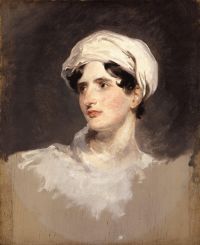 Lady Maria Callcott,
Little Arthur's history of England
(1884)
Lady Maria Callcott,
Little Arthur's history of England
(1884)
“ How Charles the First was governed by ill advisers; how he made the people pay taxes without the consent of Parliament; how the Earl of Strafford behaved very cruelly, and was beheaded; and how the King’s evil government caused a Civil War. When Charles the First came to be king, all the people were in hopes that he would be a better king than his father, as they believed he was a better man, and so he really was. ”


