Constitutional Court

Definition and stakes

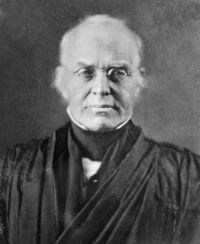
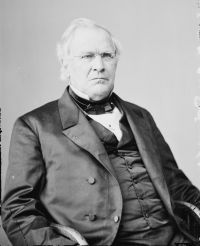
Portrait of Robert Cooper Grier Robert Cooper Grier,  Sheldon v. Sill — Opinion of the Court

“ I. The eleventh section of the Judiciary Act of 1789, inhibiting a suit by an assignee of a chose in action, in cases where the assignor could not have sued, if no assignment had been made, is constitutional; because, the disposal of the judicial power, except in a few special cases, belongs to Congress; and the courts cannot exercise jurisdiction in every case to which the judicial power extends, without the intervention of Congress, who are not bound to enlarge the jurisdiction of the Federal courts to every subject which the Constitution might warrant. ”
Source: Wikisource

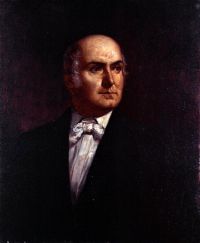
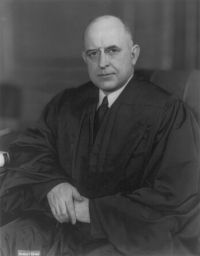
National Mutual Insurance Company of District of Columbia v…

“ We can no more review a legislative court's decision of a case which is not among those enumerated in Art. III than we can hear a case from a state court involving purely state law questions. But a question under the Constitution and laws of the United States, whether arising in a constitutional court, a state court, or a legislative court may, under the Constitution, be a subject of this Court's appellate jurisdiction. ”
Source: Wikisource

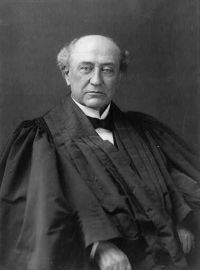
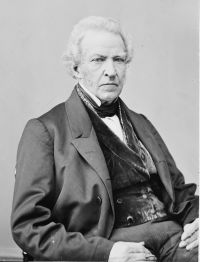
Portrait of James Moore Wayne James Moore Wayne,  Louisville, Cincinnati, and Charleston Railroad Company v…

“ The constitutional grant of judicial power extends to controversies 'between citizens of different states.' The words in the legislative grant of jurisdiction, 'of the state where the suit is brought and a citizen of another state,' are obviously no more than equivalent terms to confine suits in the Circuit Courts to those which are 'between citizens of different states.' The words in the Constitution then are just as operative to ascertain and limit jurisdiction as the words in the statute. ”
Source: Wikisource

Get perspective with Kwize: daily news enlightened by great literature