Council of Constance

Definition and stakes

Joseph Marie Noel Valois,  1911 Encyclopædia Britannica, Volume 6… (1911)

“ Interpreted in the most general sense, these decrees, which enacted that the council of Constance derived its power immediately from Jesus Christ, and that every one, even the pope, was bound to obey it and every legitimately assembled general council in all that concerned faith, reform, union, &c., were tantamount to the overturning of the constitution of the church by establishing the superiority of the council over the pope. ”
Source: Wikisource

W. C. Cartwright,  On Papal Conclaves (1868)

“ The Council of Constance is distinguished from every other Council by its convocation having been due, not to the individual impulse of a Pontiff, but to the spontaneous instinct of society in general, panting for repose from confusion and discussion, and exhausted by the evils flowing from the great schism. ”
Source: Wikisource

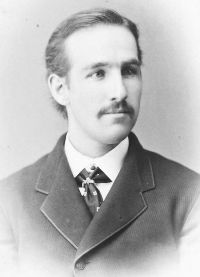
Portrait of George Park Fisher George Park Fisher,  Outlines of Universal History, Designed as a Text-book and for Private Reading

“ At these assemblies, the French theologians proceeded upon the "Gallican theory" of the constitution of the Church, according to which supreme authority was held to reside in a general council,—not in the Pope, but in the collective episcopate. At the Council of Constance, where it is a significant fact that the votes were taken by nations, there were gathered not only a throng of prelates and inferior clergy, but also the Emperor Sigismund, and a multitude of princes, nobles, and spectators of every rank. "The whole world," it was said, "was there." ”
Source: Gutenberg

Get perspective with Kwize: daily news enlightened by great literature