“ Therefore, O Diarmid, come down out of the tree, since Fionn will not grant you mercy. 'I will pledge that no evil will come to you to-day.'So Diarmid rose, and stood upon the topmost bough of the tree, and leapt light and birdlike, by the shafts of his spears, and passed out far beyond Fionn and the Fenians of Erin. And he and Oscar went their way, and no tidings were heard of them till they reached Grania and Angus on the banks of the Boyne. ”
Diarmid
Definition and stakes
The theme of “Diarmid” has been addressed by authors such as Mrs. Lang, Donald A. Mackenzie, Duke of John Douglas Sutherland Campbell Argyll and George Webbe Dasent. It is often associated with terms like Bern, Grania, Dietrich, people and Doramin.
Quotes about “Diarmid”
Mrs. Lang, The book of romance (1902)
“ The next morning they came to Diarmid where he stood on the hill, and he asked if they would like him to show them any more tricks, but they said they would rather hear some news of Diarmid first. 'I have seen a man who met him to-day,' answered Diarmid, and thereupon he laid his weapons on the ground and bounded upwards upon his javelin, coming down lightly beyond the host. 'If you call that a feat, then you have never seen a feat,' said a young warrior of the green Fenians—for so were they called from the colour of their armour. ”
“ At that Diarmid felt his heart quail like those of weaker men, and he drew his sword and dealt the boar a stout blow, but the sword broke in two; and the beast stood unharmed. With a spring he threw himself upon Diarmid, so that he tripped and fell, and somehow when he rose up he was sitting astride the back of the boar, with his face looking towards the tail. The boar tried to fling him off but could not, though he rushed down the hill and jumped three times backwards and forwards out of the river at the foot ”
Mrs. Lang, The book of romance (1902)
“ They landed at the foot of the hill where Diarmid stood, and he swiftly ran down to meet them and to ask of what country they were. 'We are three royal chiefs,' said they, 'and are sent by Fionn to take an enemy of his whom he has outlawed, called Diarmid O'Dowd. And with us are three fierce hounds whom we will loose upon his track. Fire burns them not, nor water drowns them, nor weapons wound them, and of us there are two thousand men. ”
Donald A. Mackenzie, Elves and Heroes
“ When we find Diarmid and Grainnè, like Paris and Helen, the cause of conflict and disaster; and Diarmid, like Achilles, charmed of body, and vulnerable only on his heel-spot, we incline to the theory that from a mid-European centre migrating "waves" swept over prehistoric Greece, and left traces of their mythology and folk-lore in Homer, while other "waves," sweeping northward, bequeathed to us as a literary inheritance the Celtic folk-tales, in which the deeds and magical attributes of remote tribal heroes and humanised deities are co-mingled and perpetuated. ”
Mrs. Lang, The book of romance (1902)
“ When they were safely gone, Diarmid, son of O'Dowd, spoke from the top of the tree. 'I will go down to you, Fionn, and to the Fenians, and will deal slaughter and discomfiture upon you and your people, seeing that I know your wish is to allow me no escape, but to work my death after some manner. Moreover, I have no friend who will help or protect me, since full often have I wrought havoc among the warriors of the world, for love of you. ”
Duke of John Douglas Sutherland Campbell Argyll, Memories of Canada and Scotland…
“ And none could have seen where the bristles o'erlaid The point firmly set of the venomous blade.Then silent long, the king at last Spake, all his thought to hatred cast, "O Diarmid, now measure the Boar, snout to heel, What length on the ground may the dark hide conceal?"What man among the Feinne e'er saw The youth from friend or foe withdraw? ”
George Webbe Dasent, Popular Tales from the Norse — Memoir of the Author (1912)
“ M'Diarmid, like Crichton, did all things well, being a first-rate sportsman, a good draughtsman, was a follower of science, and an author to boot. 'He possessed qualities of coolness, deliberation and courage, that would have fitted him to be the leader of a party bound on an expedition far more adventurous than our own. ”
Donald A. Mackenzie, Myths of Babylonia and Assyria
“ The Phrygian Attis met his death, according to one legend, by self-mutilation under a sacred tree. Another account sets forth, however, that he was slain by a boar. The Greek Adonis was similarly killed by a boar. This animal was a form of Ares (Mars) , god of war and tempest, who also loved Aphrodite (Ishtar) . The Celtic Diarmid, in his character as a love god, with lunar attributes, was slain by "the green boar", which appears to have been one of the animals of a ferocious Hag, an earth and air "mother" with various names. In one of the many Fingalian stories the animal is... ”
 Lady Gregory,
Gods and Fighting Men
Lady Gregory,
Gods and Fighting Men
“ Then the Steward came again, having a Druid rod with him, and he struck his own son with the rod, and he made of him a wild boar, without bristle or ear or tail, and he said: "I put you under bonds to bring Diarmuid, grandson of Duibhne, to his death; and your own life will be no longer than his life," he said. With that the wild boar rose up and ran out of the open door; and he was called afterwards the Boar of Slieve Guillion, and it was by him Diarmuid came to his death at the last.And when Diarmuid came to his full strength he was given a place among the Fianna of Ireland ”
The Dean of Lismore's Book: A Selection of Ancient Gaelic Poetry
“ Diarmad was the Adonis of the Feine. He is celebrated for his beauty, which led finally to his death, as will be seen in a future poem. He is said to have been the Ancestor of the clan Campbell, who are hence called “Clann Diarmaid,” or the “children of Diarmad.” The M’Diarmads, as well as some other subordinate clans, are also said to be of the same stock. [67] A grandson of Finn by his son Daire dearg. His mother’s name was Luigheach, whence he was called the son of Luigheach, pronounced Luy. He was a famous man among the Feine, according to Irish authorities. ”
Lady Gregory,
Gods and Fighting Men
“ CHAPTER IV. THE WOOD OF DUBHROSAnd as to Diarmuid and Grania and Muadhan, they went on through Ui Chonaill Gabhra, and left-hand ways to Ros-da-Shoileach, and Diarmuid killed a wild deer that night, and they had their fill of meat and of pure water, and they slept till the morning of the morrow. And Muadhan rose up early, and spoke to Diarmuid, and it is what he said, that he himself was going away. "It is not right for you to do that," said Diarmuid, "for everything I promised you I fulfilled it, without any dispute." ”
 John Smith Flett,
1911 Encyclopædia Britannica, Volume 8…
(1911)
John Smith Flett,
1911 Encyclopædia Britannica, Volume 8…
(1911)
“ Orthoclase is rarely entirely absent, and when it is fairly common the rock becomes a tonalite; in this way a transition is furnished between diorites and granites. It is rare to find the pure types of “hornblende-diorite,” “augite-diorite,” &c., but in most cases the rocks contain two or more ferromagnesian silicates, and such combinations as “hornblende-biotite-diorite” are commonest in nature. The felspar of the diorites ranges in composition from oligoclase to labradorite, and is often remarkably zonal, the external layers being more alkaline than the internal. ”
 Mack Reynolds,
Tourists to Terra
Mack Reynolds,
Tourists to Terra
“ He whirled to face the newcomer and saw another God confronting him. The extent of his action was beginning to be realized but Diomed had gone too far to turn back now; he charged his new opponent, shield held high and sword at the ready. The God lifted his hand, sending forth a bolt of power that brought the Greek to his knees.Diomed's eyes were filled with sudden fear and despair. "Phoebus Apollo," he quavered.The God was scornful. "Beware, Diomed," he said. "Do not think to fight with Gods." ”
Donald Campbell, A journey over land to India
“ Far from me, and from my friends, be such frigid philosophy, as may conduct us indifferent and unmoved over any ground which has been dignified by wisdom, bravery, or virtue!—that man is little to be envied whose patriotism would not gain force upon the Plain of Marathon, or whose piety would not grow warmer among the ruins of Iona.”The city of Diarbeker itself is situated in a delightful plain on the banks of the river Tigris, and nearly at its head; it is one of the richest, most trading, strong, and populous cities in Asiatic Turkey ”
Council on Pharmacy and Chemistry, The Propaganda for Reform in Proprietary Medicines…
“ Until these questions have been satisfactorily answered, the element of mystery about the composition of Dioradin cannot be cleared away.EXPERIMENTAL EVIDENCE The available experimental evidence regarding “Dioradin” is restricted to some quotations from its inventor Szendeffy, in the paper of Bernheim and Dieupart (p. 334) . These, if confirmed, would show that radium alone has practically no effect on cultures of tubercle or colon bacilli; that 0.1 gm. of “iode-menthol” (concentration not stated) checks the growth of the acid-fast organisms ”
John Smith Flett,
1911 Encyclopædia Britannica, Volume 8…
(1911)
“ DIORITE (from the Gr. διορίζειν to distinguish, from διά through, ὅρος, a boundary) , in petrology, the name given by Haüy to a family of rocks of granitic texture, composed of plagioclase felspar and hornblende. As they are richer in the dark coloured ferromagnesian minerals they are usually grey or dark grey, and have a higher specific gravity than granite. They also rarely show visible quartz. But there are diorites of many kinds, as the name applies rather to a family of rocks than to a single species. Some contain biotite, others augite or hypersthene; many have a small amount of quartz. ”
 Denis Diderot,
Les Bijoux Indiscrets, or, The Indiscreet Toys
Denis Diderot,
Les Bijoux Indiscrets, or, The Indiscreet Toys
“ Poor Ifec, being put out of countenance, grew pale, trembled, fainted. "Madam is subject to the vapors," said Mangogul with an air of tranquillity: "let her be carried into an appartment of the Seraglio, and be taken care of." Then immediately addressing Phenice: "Madam," said he, "was not your husband a Pacha?" "Yes, sir," answered Phenice in a trembling voice. "And how have you lost him?" "Sir, he died in his bed, quite exhausted with the fatigues of the last campaign"—"With the fatigues of the last campaign," replied Phenice's Toy. ”
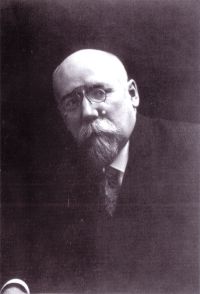 Fyodor Sologub,
The Sweet-Scented Name
(1915)
Fyodor Sologub,
The Sweet-Scented Name
(1915)
“ Suddenly the black cloak fell from the shoulders of the visitor and Gurof recognised him—it was the child Timaride. "Are you going to kill the Beast?" asked Timaride in a high-sounding voice. "I have brought him to you. The malicious gift of godhead will avail you no longer, for the curse is dead. It availed you once, making as nothing my sacrifice and hiding from your eyes the glory of your exploit. But to-day the tune is changed, dead is the curse, get your sword quickly and kill the Beast. ”
Thomas Olden, Dictionary of National Biography… (1887)
“ This prince received him kindly, and bound his seven successors to pay three cows annually to Corbmac and those who should come after him; but Aidan, son of Colman, who had a monastery near, fearing lest the interests of his church should suffer, remonstrated with him, and advised that he as a stranger should return to his own country, and seek for lands there. King Diermid tried to make peace, but Corbmac determined to return to his friends, the sons of Amalgaid, and devoted himself to the office of peacemaker, endeavouring to establish good feeling between them and the race of Cian. ”
Lady Gregory,
Gods and Fighting Men
“ Then a young man of the Green Champions said: "It is a man has never seen feats that would call that a feat"; and he put off his clothing and made a leap, and if he did he came down heavily on the point of the spear, and it went through his heart, and he fell to the ground. The next day Diarmuid came again, and he brought two forked poles out of the wood and put them standing upright on the hill, and he put the sword of Angus Og, the Mor-alltach, the Big-fierce one, between the two forks on its edge. ”
John Arnott MacCulloch, The Mythology of All Races/Volume 3 (1918)
“ Diarmaid refused to go, but asked the god to take Grainne, which Oengus did, reaching a distant wood unseen. There Diarmaid came to them and found a fire and a meal prepared by Oengus, who ere he left them warned Diarmaid of the places into which he must not go. When Diarmaid and Grainne took refuge in the quicken-tree of Dubhros, Oengus came invisibly as before, but now as each warrior in succession climbed the tree to take Diarmaid's head, he gave them the hero's form as he threw them down. ”
H. A. Guerber, Legends of the Middle Ages
“ Dietrich soon came to a forest, where, feeling hungry, he slew an elk and proceeded to roast some of its flesh upon a spit. While he was thus engaged he heard shrill cries, and looking up, he saw a giant holding a dwarf and about to devour him. Ever ready to succor the feeble and oppressed, Dietrich caught up his sword and attacked the giant, who made a brave but fruitless defense. The dwarf, seeing his tormentor dead, then advised Dietrich to fly in haste, lest Sigenot, the most terrible of all the mountain giants, should come to avenge his companion's murder. ”
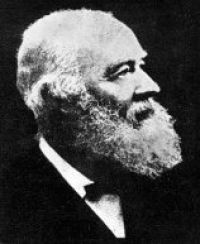 John Ball,
The geography and geology of south-eastern Egypt
(1912)
John Ball,
The geography and geology of south-eastern Egypt
(1912)
“ Fig. 18.—Diorite of Gebel Allawi [10,313] , × 10. pl, plagioclase felspar, clouded by decomposition products; h, hornblende, olive-brown in colour; ha, hornblende altering to pale-green chlorite; m, magnetite.Diorite in the narrowest sense of the term (plagioclase-hornblende rock) is not by any means abundant. Curiously enough, it is generally found in the neighbourhood of old gold mines, as for instance in the Kurdeman and Allawi districts, and it was employed by the ancient miners for their crushing pans. ”
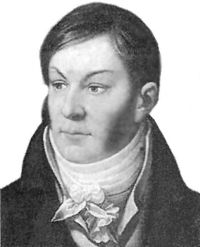 Johann August Apel,
Tales of the Dead
(1813)
Johann August Apel,
Tales of the Dead
(1813)
“ Ditmar, the first of my ancestry mentioned in the written records, accompanied the emperor Otho to Italy. His history is also very obscure. He had an enemy called count Bruno, whose only son he killed in revenge, according to ancient tradition, and then kept the father confined till his death in that tower, whose ruins, situated in the Nun’s rock, still defy the hand of time. That portrait which hangs alone in the state-chamber, is Ditmar’s; and if the traditions of the family are to be believed, it was painted by the Dead. ”
“ It was a bare room where Dirk's treasure was sleeping,—not a thing in it save the two wooden stools and rough board which upheld their still little burden. Pure and white the child lay,—a fair, delicate flower when compared with the dinginess and squalor of everything about it; and something of this contrast seemed to glimmer upon Dirk's rough perceptions, for he said to Noll,—"Ye wouldn't think she could be mine, lad! Ye don't wonder the little gal couldn't come up like the rest o' the young uns?" ”
 Joseph Conrad,
Lord Jim — Chapter 25
(1900)
Joseph Conrad,
Lord Jim — Chapter 25
(1900)
“ In the afternoon she would sit in a very roomy arm-chair, opposite her husband, gazing steadily through a wide opening in the wall which gave an extensive view of the settlement and the river.'She invariably tucked up her feet under her, but old Doramin sat squarely, sat imposingly as a mountain sits on a plain. He was only of the nakhoda or merchant class, but the respect shown to him and the dignity of his bearing were very striking. He was the chief of the second power in Patusan. ”
Joseph Conrad,
Lord Jim
(1900)
“ Doramin had sent over twice a trusty servant to tell him seriously that he could do nothing for his safety unless he would recross the river again and live amongst the Bugis as at first. People of every condition used to call, often in the dead of night, in order to disclose to him plots for his assassination. He was to be poisoned. He was to be stabbed in the bath-house. Arrangements were being made to have him shot from a boat on the river. Each of these informants professed himself to be his very good friend. It was enough—he told me—to spoil a fellow’s rest for ever. ”
Various, The New Gresham Encyclopedia. Deposition to Eberswalde
“ It is the principal agent in respiration, particularly in inspiration. A complete diaphragm is found only in Mammalia.Diarbek ́ir, a town in Armenia, formerly in Asiatic Turkey, capital of the vilayet of same name, on a high bank overlooking the Tigris, and surrounded by a lofty massive wall. It has manufactures of iron- and copper-ware, leather, silk, woollen, and cotton goods, and a considerable trade. Pop. about 38,000.—The province of Diarbekir has an area of 14,480 sq. ”
Fyodor Sologub,
The Sweet-Scented Name
(1915)
“ Gurof said: "What is the Beast to me. I have fixed my walls about me for ever, and the Beast will not find a way to me in my fortress." At that the grey ones rejoiced and scampered round the room anew, but the Herald of the Beast cried out once more, and sharp and stern were his accents: "Do you not see that I am here. I am here because I have found you. I am here because the curse of the walls has lost power. I am here because Timaride is waiting and tirelessly questioning. Do you not hear the gentle laughter of the brave and trusting child? Do you not hear the roaring of the Beast?" ”
