Doctor of Civil Law

Definition and stakes

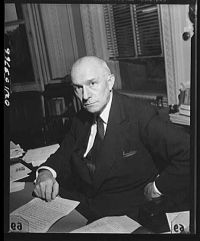
Portrait of Stanley Kuhl Hornbeck Stanley Kuhl Hornbeck Oxford and the Rhodes Scholarships (1907)

There are no further requirements of scholarship. [52]
D.Litt., D.Sc., D.C.L. Candidates who have taken the Bachelor’s degree in Letters or Science may proceed to the Doctorate in the twenty-seventh Term from the date of their matriculation. Bachelors of Civil Law cannot take the degree of D.C.L. until the expiration of five years from the time of their admission to the B.C.L. In any case, all candidates for the Doctor’s degree in Letters, Science, or Civil Law are required to submit a dissertation [68] which has contributed to the advancement of knowledge in their particular field.
Source: Gutenberg

1911 Encyclopædia Britannica (1911)

In the Law School there is one course for candidates for the degree of Bachelor of Laws and another for candidates for the degree of Bachelor of Civil Law, the latter requiring the study of Roman law and allowing the substitution of certain studies in political science for some of the law subjects. The Graduate School confers the degrees of Master of Arts and Doctor of Philosophy
Source: Wikisource

John Palmer Gavit Americans by Choice

The training of the examiners always has been of the most haphazard, inadequate character. Even under the operation of the Civil-Service laws, it was held that the kind of experience a man ought to have for the field service was that of general contact with the public—that of policemen, street-car conductors, and the like. Yet, as the practice has grown up, these men have to appear in important courts virtually in the guise of attorneys for the government; they must know the law, not only as set forth in the statutes, but as interpreted in innumerable decisions of Federal and state courts.
Source: Gutenberg

Get perspective with Kwize: daily news enlightened by great literature