Summary

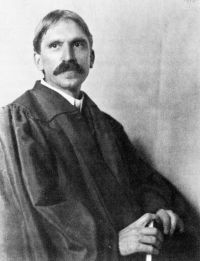
Portrait of John Dewey John Dewey German philosophy and politics

We have no right to cast stones at any warring nation till we have asked ourselves whether we are willing to forego this principle and to submit affairs which limited imagination and sense have led us to consider strictly national to an international legislature. In and of itself, the idea of peace is a negative idea; it is a police idea. There are things more important than keeping one's body whole and one's property intact. Disturbing the peace is bad, not because peace is disturbed, but because the fruitful processes of coöperation in the great experiment of living together are disturbed.
Source: Gutenberg

Portrait of John Dewey John Dewey German philosophy and politics

It is not open to man to accept or reject this truth as he may see fit. It is a principle of reason which is involved in every exercise of reason. In denying it in name, man none the less acknowledges it in fact. Only men already sophisticated by vice who are seeking an excuse for their viciousness ever try to deny, even in words, the response which freedom makes to the voice of duty. Since, however, freedom is an absolute stranger to the natural and sensible world, man's possession of moral freedom is the final sign and seal of his membership in a supersensible world.
Source: Gutenberg

Portrait of John Dewey John Dewey German philosophy and politics

Yet we should do injustice to Kant if we inferred that he expected this dualism of spheres of action, with its twofold moral law of freedom and obedience, to endure forever. By the exercise of freedom of thought, and by its publication and the education which should make its results permeate the whole state, the habits of a nation will finally become elevated to rationality, and the spread of reason will make it possible for the government to treat men, not as cogs in a machine, but in accord with the dignity of rational creatures.
Source: Gutenberg

Get perspective with Kwize: daily news enlightened by great literature