Egyptian mythology

Definition and stakes

G. G. Zerffi,  A Manual of the Historical Development of Art

“ Who does not understand at once that, out of these half-astronomical, half-cosmogonical conceptions, a religion and art full of mysticism, blending into one Fetishism, Astrology, and Anthropomorphism, must have grown? Only through a careful study of Egyptian mythology are we enabled to comprehend that gigantic power which urged the people to construct those temples and palaces, those labyrinths and catacombs, as mystic in themselves, as the hidden powers of nature. The masses in Egypt were kept in a degraded state of passive obedience ”
Source: Gutenberg

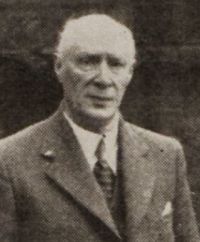
Portrait of Lewis Spence Lewis Spence,  Myths and Legends of Ancient Egypt

“ Of late years many works by learned Egyptologists have been published which purport to supply a more or less wide survey of Egyptian mythology and to unravel its deeper significances. The authors of some of these works, however admirable they may be as archæologists or as translators of hieroglyphic texts, are for the most part but poorly equipped to grapple with mythological difficulties. To ensure success in mythological elucidation a special training is necessary, and a prolonged familiarity with the phenomena of early religion in its many and diverse forms is a first essential. ”
Source: Gutenberg

Portrait of George Rawlinson George Rawlinson,  Ancient Egypt (1886)

“ Set in the old Egyptian mythology was recognized as "the patron of foreigners, the power which swept the children of the desert like a sand-storm over the fertile land." He was a representative of physical, but not of moral, evil; a strong and powerful deity, worthy of reverence and worship, but less an object of love than of fear. ”
Source: Wikisource

Get perspective with Kwize: daily news enlightened by great literature