“ I call it our English Renaissance because it is indeed a sort of new birth of the spirit of man, like the great Italian Renaissance of the fifteenth century, in its desire for a more gracious and comely way of life, its passion for physical beauty, its exclusive attention to form, its seeking for new subjects for poetry, new forms of art, new intellectual and imaginative enjoyments: and I call it our romantic movement because it is our most recent expression of beauty. ”
English Renaissance
Definition and stakes
The theme of “English Renaissance” has been addressed by authors such as Murray Anthony Potter, Charles Herbert Moore, G. H. Mair, John Addington Symonds and William J. Long. It is often associated with terms like literature, middle, art, classics and Reformation.
Quotes about “English Renaissance”
“ Yet, I think that in estimating the sensuous and intellectual spirit which presides over our English Renaissance, any attempt to isolate it in any way from the progress and movement and social life of the age that has produced it would be to rob it of its true vitality, possibly to mistake its true meaning. And in disengaging from the pursuits and passions of this crowded modern world those passions and pursuits which have to do with art and the love of art, we must take into account many great events of history which seem to be the most opposed to any such artistic feeling. ”
“ Such then is the principle which I believe to be guiding and underlying our English Renaissance, a Renaissance many-sided and wonderful, productive of strong ambitions and lofty personalities, yet for all its splendid achievements in poetry and in the decorative arts and in painting, for all the increased comeliness and grace of dress, and the furniture of houses and the like, not complete. For there can be no great sculpture without a beautiful national life, and the commercial spirit of England has killed that ”
Clare Howard, English Travellers of the Renaissance
“ And as the scientific spirit or the socialistic spirit can give to the permanent instincts of the world a new zest, so the Renaissance passion for self-expansion and for education gave to the old road a new mirage. ”
 William J. Long,
English Literature
“ Greek ideas and Greek culture came to England in the Renaissance, and man's spiritual freedom was proclaimed in the Reformation. The great names of the period are numerous and significant, but literature is strangely silent. Probably the very turmoil of the age prevented any literary development, for literature is one of the arts of peace; it requires quiet and meditation rather than activity, and the stirring life of the Renaissance had first to be lived before it could express itself in the new literature of the Elizabethan period. ”
 Hippolyte Taine,
History of English Literature Volume 1…
“ It is full of political animus, sensual liveliness, English and popular instincts; it lives. It is a coarse life, still elementary, swarming with ignoble vermin, like that which appears in a great decomposing body. It is life, nevertheless, with its two great features which it is destined to display: the hatred of the ecclesiastical hierarchy, which is the Reformation; the return to the senses and to natural life, which is the Renaissance. ”
G. H. Mair, English Literature: Modern
“ Putting it very broadly one may say that literature in the seventeenth century becomes for the first time essentially modern in spirit. We began our survey of modern English literature at the Renaissance because the discovery of the New World, and the widening of human experience and knowledge, which that and the revival of classical learning implied, mark a definite break from a way of thought which had been continuous since the break up of the Roman Empire. The men of the Renaissance felt themselves to be modern. ”
J. Alfred Gotch, The Growth of the English House (1909)
“ The Renaissance stands not only for a revival of ancient forms in architecture, sculpture, and painting, but for a vast awakening in all departments of human enterprise, and the final abandonment of mediævalism with all its crude and crabbed methods and ways of thought. ”
G. H. Mair, English Literature: Modern
“ One cannot fix a term to day or night, and the theory of the Renaissance as a kind of tropical dawn—a sudden passage to light from darkness—is not to be considered. The Renaissance was, and was the result of, a numerous and various series of events which followed and accompanied one another from the fourteenth to the beginning of the sixteenth centuries. First and most immediate in its influence on art and literature and thought, was the rediscovery of the ancient literatures. ”
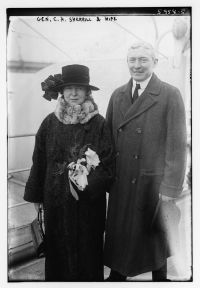 Charles Hitchcock Sherrill,
Stained Glass Tours in England
“ RENAISSANCE In England there is not to be found the same awakening and change in art at the opening of the sixteenth century which is encountered in France, and is known to us as the Renaissance. This revival of art reached the English at second hand, having been transmitted to them through the French. ”
Robert Huntington Fletcher, A History of English Literature
“ The first half of the seventeenth century as a whole, compared with the Elizabethan age, was a period of relaxing vigor. The Renaissance enthusiasm had spent itself, and in place of the danger and glory which had long united the nation there followed increasing dissension in religion and politics and uncertainty as to the future of England and, indeed, as to the whole purpose of life. ”
 Alfred Noyes,
The Flower of Old Japan, and Other Poems
“ VOLUME V. The Constitutional Compromise of the Eighteenth Century—Effects of the Classical Renaissance—Its Zenith and Decline—The Early Romantic Renaissance.“It is his privilege to have made a contribution of great value and signal importance to the history of English Literature.”—Pall Mall Gazette. ”
William J. Long,
English Literature
“ The Revival of Learning denotes, in its broadest sense, that gradual enlightenment of the human mind after the darkness of the Middle Ages. The names Renaissance and Humanism, which are often applied to the same movement, have properly a narrower significance. The term Renaissance, though used by many writers "to denote the whole transition from the Middle Ages to the modern world," [106] is more correctly applied to the revival of art resulting from the discovery and imitation of classic models in the fourteenth and fifteenth centuries. ”
 Edward Albert,
A history of English literature
(1923)
“ In England the period begins with wars, unrest, and almost chaos; it concludes with a settled dynasty, a reformed religion, and a people united and progressive. Abroad, as well as in England, there is apparent the broad intellectual flood known as the Renaissance, running deep and strong: the renewed desire for knowledge, changes in religious ideals, the discovery of new worlds, both geographical and literary, and the enormous quickening of heart and mind. In England the scene is being prepared for the great age to follow. ”
James J. Walsh, Education: How Old The New
“ In England the Renaissance did not affect art much, nor architecture, though it did profoundly stir the men of letters, and the great Elizabethan period of English literature is really an expression of the Renaissance in England. Here almost more than anywhere else in Europe the women shared in the uplift and devotion to things intellectual that developed. ”
 Walter Pater,
The Renaissance: Studies in Art and Poetry
“ There, as I said, is the strength of the old French story. For the Renaissance has not only the sweetness which it derives from the classical world, but also that curious strength of which there are great resources in the true middle age. ”
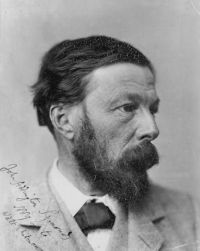 John Addington Symonds,
Sketches and Studies in Italy and Greece…
“ It may seem absurd to class them all together; yet there is no doubt that the French Revolution, the criticism of the Bible, Pantheistic forms of religious feeling, landscape-painting, Alpine travelling, and the poetry of Nature, are all signs of the same movement—of a new Renaissance. Limitations of every sort have been shaken off during the last century; all forms have been destroyed, all questions asked. ”
 Oscar Wilde,
A Critic in Pall Mall: Being Extracts from Reviews and Miscellanies
“ The Renaissance had for its object the development of great personalities. The perfect freedom of the temperament in matters of art, the perfect freedom of the intellect in intellectual matters, the full development of the individual, were the things it aimed at. ”
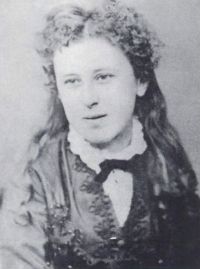 Vernon Lee,
Euphorion - Vol. I
“ The Renaissance has interested and interests me, not merely for what it is, but even more for what it sprang from, and for the manner in which the many things inherited from both Middle Ages and Renaissance, the tendencies and necessities inherent in every special civilization, acted and reacted upon each other, united in concord or antagonism; forming, like the gases of the chemist, new things, sometimes like and sometimes unlike themselves and each other ”
 W. E. B. Du Bois,
John Brown
(1909)
“ They still felt the impulse of the wonderful awakening of culture from, its barbaric sleep of centuries which men call the Renaissance; they were own children of the mighty stirring of Europe's conscience which we call the Reformation; and they and their children were to be prime actors in laying the foundations of human liberty in a new century and a new land. ”
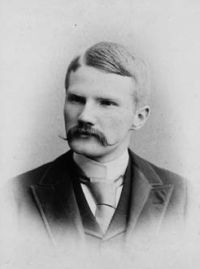 Charles Homer Haskins,
The Normans in European History
(1915)
“ Since, however, we have come to view the Renaissance in its larger aspects as far more than a classical revival, its relations to the Middle Ages are seen to have been much more intimate and important than was once supposed. ”
P. L. Jacob, The Arts in the Middle Ages and at the Period of the Renaissance
“ During the Middle Ages, Art generally followed the inspirations of that Christian spirit which presided at the formation of this new world. It arose to reproduce in an admirable manner the religious ideal. Only towards the end of that period it searched out for beauty of form, and began to find it when the Renaissance made its appearance: the Renaissance, that is, the intellectual revolution, which, in the fifteenth and sixteenth centuries, restored among modern nations the sceptre to Literature and the Arts of antiquity. ”
J. N. Larned, History for ready reference, Volume 4… (1895)
“ Through the instrumentality of art, and of all the ideas which art introduced into daily life, the Renaissance wrought for the modern world a real resurrection of the body. ... It was scholarship which revealed to men the wealth of their own minds, the dignity of human thought, the value of human speculation, the importance of human life regarded as a thing apart from religious rules and dogmas. ... The Renaissance opened to the whole reading public the treasure-houses of Greek and Latin literature. At the same time the Bible in its original tongues was rediscovered. ”
James MacCaffrey, History of the Catholic Church from the Renaissance to the French Revolution…
“ In this great upheaval that was characterised by a demand for unrestricted liberty of investigation, a return to the study of nature and of the natural sciences, the rise and development of national literatures, and the appearance of a new school of art, the Humanist movement or the revival of the study of the classics, the /literae humaniores/, played the fundamental part. In more senses than one it may be called the Age of the Renaissance. ”
Charles Herbert Moore, Character of Renaissance Architecture (1905)
“ The individuality that had been developed by the institutions and the intellectual life of the Middle Ages was vastly different from that which was produced by the influences of the Renaissance, and it was in many ways more excellent. ”
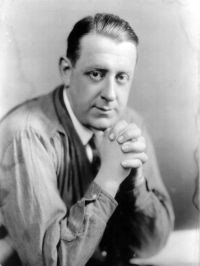 Hendrik Willem Van Loon,
The Story of Mankind
“ The point, however, which I want to make is this—the Middle Ages and especially the thirteenth century were not a time when the world stood entirely still. Among the younger generation, there was life, there was enthusiasm, and there was a restless if somewhat bashful asking of questions. And out of this turmoil grew the Renaissance. ”
Charles Herbert Moore, Character of Renaissance Architecture (1905)
“ The desire for intellectual freedom, and the thirst for new knowledge, which were thus stimulated in the fifteenth century constitute the good side of the Renaissance movement, the side which has hitherto been most emphasized by writers, and to which the modern world is indebted for a strong stimulus in the direction of some of its most fruitful activities. ”
Amy Steedman, Knights of Art: Stories of the Italian Painters
“ Then came the time which is called 'The Renaissance,' a word which means being born again, or a new awakening, when men began to draw real pictures of real things and fill the world with images of beauty. ”
Walter Pater,
The Renaissance: Studies in Art and Poetry
“ The word Renaissance, indeed, is now generally used to denote not merely that revival of classical antiquity which took place in the fifteenth century, and to which the word was first applied, but a whole complex movement, of which that revival of classical antiquity was but one element or symptom. ”
J. M. Stone, The History of Mary I, Queen of England
“ Too recent to appear picturesque, the Middle Ages were, to the pioneers of the new era, out of date and old-fashioned, terms far more injurious than the most violent word-war of the preachers. Filled with the new wine of the Renaissance, these youthful enthusiasts formed the nucleus of that phalanx of life-loving, [Pg 259] exuberant personalities who, throwing all their energies into the glorification of liberty, fame, pleasure, and earthly beauty, gave us subsequently the Elizabethan age. ”
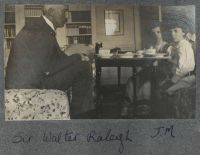 Sir Walter Alexander Raleigh,
Romance: Two Lectures
“ Modern scholars, if they are forced to find a beginning for modern literature, would prefer to p. 6date it from the wonderful outburst of vernacular poetry in the latter part of the twelfth century, and, if they must name a birthplace, would claim attention for the Court of King Henry II.In some of its aspects, the Romantic revival may be exhibited as a natural consequence of the Renaissance. Classical scholarship at first scorned the vernacular literatures, and did all its work of criticism and imitation in the Latin tongue. ”
John Rothwell Slater, Printing and the Renaissance
“ The middle of the sixteenth century in France is thus marked by a curious blend of those two distinct movements in human history which we call the Renaissance and the Reformation, and the blend is nowhere more picturesque than in the life of Robert Estienne. ”
The Great Events by Famous Historians…
“ Thus what the word Renaissance really means is new birth to liberty—the spirit of mankind recovering consciousness and the power of self-determination, recognizing the beauty of the outer world and of the body through art, liberating the reason in science and the conscience in religion, restoring culture to the intelligence, and establishing the principle of political freedom. The Church was the schoolmaster of the Middle Ages. Culture was the humanizing and refining influence of the Renaissance. ”
Hutton Webster, Early European History
“ MEANING OF THE RENAISSANCE LATER PERIOD OF THE MIDDLE AGES The fourteenth and fifteenth centuries, covering the later period of the Middle Ages, are commonly known as those of the Renaissance. This French word means Rebirth or Revival. It is a convenient term for all the changes in society, law, and government, in science, philosophy, and religion, in literature and art which gradually transformed medieval civilization into that of modern times. ”
 F. W. Moorman,
Songs of the Ridings
“ We are justly proud of the Renaissance and of the glories of our Elizabethan literature, but let us frankly own that in the annals of poetry there was loss as well as gain. The gain was for the courtier and the scholar, and for all those who, in the centuries that followed the Renaissance, have been able, by means of education, to enter into the courtier’s and scholar’s inheritance. The loss has been for the people. ”
 William Ralph Inge,
Outspoken Essays
“ This prediction, which opens a truly appalling prospect for civilisation, might be less terrible if the Church were to open its arms to a new Renaissance, and become once more, as in the beginning of the modern period, the home of learning and the patroness of the arts. ”
 Hilaire Belloc,
Europe and the Faith
(1920)
“ The Renaissance, a noble and vividly European thing, was much older than the Reformation, which was its perversion and corruption. The doors upon modern knowledge had been opened before the soul, which was to enter them, had been cut off from its fellows. ”
J. N. Larned, History for ready reference, Volume 2…
“ For the thirteenth century, while it belongs chronologically to mediæval times, seems nearer in spirit to the Renaissance--shows more of the travail of the birth of our modern mind and life--than the fourteenth, and even more than the greater part of the years of the fifteenth century. ”
 George Saintsbury,
A Short History of French Literature
“ But the intense admiration of the severe beauties of classical literature, which was the dominant literary note of the Renaissance, translated itself in their active minds into a determination to make, if it were possible, French itself more able to emulate the triumphs of Greek and of Latin. ”
Related terms
Authors who wrote about “English Renaissance”
 Murray Anthony PotterCharles Herbert MooreG. H. MairJohn Addington SymondsWilliam J. LongWalter PaterDonald Lemen ClarkVernon Lee
 Charles Sears BaldwinRobert Huntington FletcherJohn Richard GreenA. R. OrageMargaret Bertha SyngeEdward Albert
 William Allan Neilson
 George Park Fisher
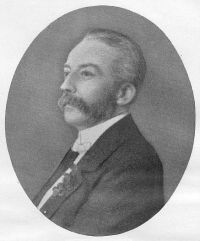 Richard Claverhouse Jebb
 Ralph Waldo EmersonJohn Rothwell SlaterClare Howard
