English alphabet

Definition and stakes

R. G. Latham,  A Handbook of the English Language

“ Such is the general view of the additions, ejections, changes of power, and changes of order in the English alphabet. The extent, however, to which an alphabet is faulty, is no measure of the extent to which an orthography is faulty; since an insufficient alphabet may, by consistency in its application, be more useful than a full and perfect alphabet unsteadily applied.
§ 174. One of our orthographical expedients, viz., the reduplication of the consonant following, to express the shortness (dependence) of the preceding vowel, is as old as the classical languages: terra, θάλασσα.
”

Source: Gutenberg

Henry B. Wheatley,  How to Make an Index

“ There are few things more irritating [pg 136] than to find the alphabet confused by the union of the vowel i with the consonant j, or the vowel u with the consonant v. No doubt they were not distinguished some centuries ago, but this is no reason why they should again be confused now that they are usually distinct. There may be special reasons why they should be mixed together in the British Museum Catalogue, but it is not evident that these are sufficient.
The only safe rule is to use the English alphabet as it is to-day in an English index.
”
Source: Gutenberg

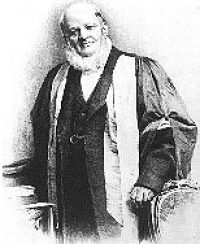
Portrait of A. H. Sayce A. H. Sayce,  Introduction to the science of language… (1880)

“ No doubt the practical man does not want the alphabet required by the phonologist, who must denote every shade of sound and have separate symbols for the sounds heard not in English only, but in other languages as well, but the alphabet of the practical man should be based on that of the phonologist. The reformed alphabet should be one which would enable the child or the foreigner to recognize at once the sound of the word he is reading, and the philologist to determine the pronunciation of the writer. ”
Source: Gutenberg

Get perspective with Kwize: daily news enlightened by great literature