Reduplication

Definition and stakes

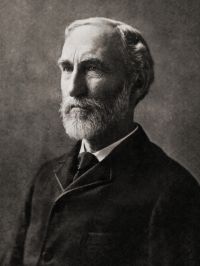
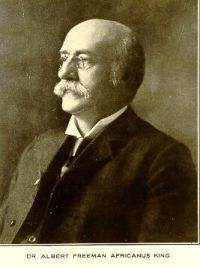
Portrait of Albert Freeman Africanus King Albert Freeman Africanus King,  Popular Science Monthly (1875)

“ Abrupt changes of shape, size, etc., incident to function, are, of course, quite common, but these are only temporary, and quite distinct from the more stable organic changes constituting growth. Indeed, it may be taken as an invariable rule that structural changes of any considerable extent, that occur abruptly and remain permanent, are always unnatural, and are to be attributed to the action, direct or indirect, of some disturbing cause. ”
Source: Wikisource

Th. Ribot,  The Psychology of the Emotions (1897)

“ The law of decay, in psychology, consists in a continuous retrogression, descending from the higher to the lower, from the complex to the simple, from the unstable to the stable, from the most to the least organised; in other words, those manifestations which are the latest in date of evolution are the first to disappear; while those which were the first to appear are the last to vanish. Evolution and decay follow opposite courses. ”
Source: Gutenberg

Portrait of Plato Plato,  Parmenides

“ And the transition is a process of generation and destruction, into and from being and not-being, the one and the others. For the generation of the one is the destruction of the others, and the generation of the others is the destruction of the one. There is also separation and aggregation, assimilation and dissimilation, increase, diminution, equalization, a passage from motion to rest, and from rest to motion in the one and many. ”
Source: Gutenberg

Get perspective with Kwize: daily news enlightened by great literature