“ If we place our Fortunate Islands solely within the walls of space and time, they will dissolve into a mocking dream; for there will always be pain that no wisdom can assuage. They must lie on the edge of the horizon with the glimmer of a strange sea about their shores and their mountain peaks hidden among the clouds. ”
Fortunate Islands
Definition and stakes
The theme of “Fortunate Islands” has been addressed by authors such as Tom Kettle, William Henry Babcock, Mór Jókai, Aimé Bonpland and Sir Richard Francis Burton. It is often associated with terms like island, people, indigenous, ocean and reef.
Quotes about “Fortunate Islands”
 Tom Kettle,
The Open Secret of Ireland
“ Let justice only triumph in this one regard, and our keel will grate on the shore of the Fortunate Islands, the Earthly Paradise. All the harshness of life will be dulcified; we shall lie dreaming on golden sands, dipping full goblets out of a sea that has been transmuted into lemonade. ”
“ This is no island, but a continent ten times as large as the continent beyond the seas. Those who dwell on one side of it do not even know the names of those who dwell on the other. The boldest travellers do not yet know the boundaries of this continent, and whatsoever direction they take they always come upon new lands, new mountains, and new peoples, a hundred-fold more numerous than those of Rome and Greece put together, as described by them who come from thence. The Fortunate Islands have no limit, they are infinity itself. ”
 Aimé Bonpland,
Personal Narrative of Travels to the Equinoctial Regions of America…
“ The name of Fortunate Islands was long in as vague signification, as that of El Dorado among the conquerors of America. Happiness was thought to reside at the end of the earth, as we seek for the most exquisite enjoyments of the mind in an ideal world beyond the limits of reality.* (* The idea of the happiness, the great civilization, and the riches of the inhabitants of the north, was common to the Greeks, to the people of India, and to the Mexicans.) ”
 Sir Richard Francis Burton,
Ultima Thule; or, A Summer in Iceland…
“ Yet even after the occupation of Iceland by the Northmen, we find in the literary world the same vagueness which prevailed in earlier ages. For instance, Isaac Tzetzes (twelfth century) , in his notes on Lycophron, calls the fabled Fortunate Islands of the Greeks “the Isle of Souls, a British island between the west of Britain and Thule towards the east,” which is impossible. ”
William Henry Babcock, Legendary Islands of the Atlantic…
“ But in point of fact the map as we have it answers to the narrative singularly well. Any blurs or lacunae which needed restoration must have occurred in very fortunate places. Iceland, Shetland,142 Greenland, Scotland, Estotiland, and Drogio are all not very far from where they should be. The Orkneys and Fair Island, if too far west in fact, are only far enough to suit the tale, for when Antonio sails eastward he comes to them and knows he has passed east of Iceland, a reflection more likely to occur if the interval were rather small than if it were very great. ”
Gomes Eannes de Zurara, The Chronicle of the Discovery and Conquest of Guinea…
“ None of the natives had any boats, and there was no good store of harbours. On one island was a mountain, which they reckoned as 30,000 feet high, and on its summit a fortress-like rock, with a mast atop of it rigged with a yard and lateen sail—a manifest proof of enchantment. No wealth was found in any of the islands, and hence perhaps the venture of 1341 was not followed up by Portugal for many years; but it is probable that the results of this year are commemorated in the delineation of the Fortunate Isles upon the Laurentian Portolano of 1351. ”
William Henry Babcock, Legendary Islands of the Atlantic…
“ Since “u” was currently substituted for “v,” and “m” and “n” were interchangeable on these old maps, the last two words should probably be read “sive puellam.” However the ending of the inscription be interpreted, there can be no doubt about St. Brendan and his title to the islands—according to Dulcert. And that this island group must be identified with Madeira and her consorts (though Madeira is named Capraria and Porto Santo is named Primaria) hardly admits of any question.If the identification of them with the Fortunate Islands especially favored by St. ”
Pietro Martire d' Anghiera, De Orbe Novo, Volume 1 (of 2)
“ They are distant from Cadiz about three hundred leagues; for, according to the masters of the art of navigation, each marine league is equal to four thousand paces. [3] In ancient times these islands were called Fortunate, because of the mild temperature they enjoyed. The islanders suffered neither from the heat of summer nor the rigours of winter: some authors consider that the real Fortunate Isles correspond to the archipelago which the Portuguese have named Cape Verde. If they are at present called the Canaries, it is because they are inhabited by men who are naked and have no religion. ”
 Henry Harland,
Comedies and Errors
“ Youth faces forward, impatient of the present, panting to anticipate the future. But we who have crossed a certain sad meridian, we turn our gaze backwards, and tell the relentless gods what we would sacrifice to recover a little of the past, one of those shining days when to us also it was given to sojourn among the Fortunate Islands. ”
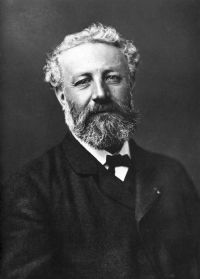 Jules Verne,
Celebrated Travels and Travellers…
“ Nineteen men died, and thirty were seized with violent pains in their arms and legs, which caused prolonged sufferings. At last, after having sailed over more than 12,000 miles without meeting with a single island, in a sea where so many and such populous archipelagos were destined to be discovered, the fleet came upon two desert and sterile islands, called for that reason the Unfortunate Islands, but of which the position is indicated in much too contradictory a manner, for it to be possible to recognize them. ”
 Louis Becke,
The Call of the South
“ The group lies between the south end of New Ireland and the north end of the great Bougainville Island in the Solomon Archipelago, and consists of six low, well-wooded and fertile islands, enclosed within a barrier reef, forming a noble atoll, almost circular in shape. All the islands are thickly populated at the present day by natives, who are peaceable enough, and engage in bêche-de-mer and pearl-shell fishing. ”
Anonymous, Famous Islands and Memorable Voyages
“ Everything of value on board was taken to the island, even the iron-work of the ship itself being removed, and when the Bounty was reduced to an empty and useless hulk, she was set on fire and burnt to the water-edge, that no passing ship might see any trace of inhabitants on the lonely island where these unhappy men sought to hide themselves. ”
 Lafcadio Hearn,
Chita: A Memory of Last Island
“ But with its imposing groves of oak, its golden wealth of orange-trees, its odorous lanes of oleander. its broad grazing-meadows yellow-starred with wild camomile, Grande Isle remains the prettiest island of the Gulf; and its loveliness is exceptional. For the bleakness of Grand Terre is reiterated by most of the other islands,—Caillou, Cassetete, Calumet, Wine Island, the twin Timbaliers, Gull Island, and the many islets haunted by the gray pelican,—all of which are little more than sand-bars covered with wiry grasses, prairie-cane, and scrub-timber. ”
John D. Jones, Life and Adventure in the South Pacific
“ They were placed in the canoes, waved their hands feebly, and started for the shore. Pleasant Island is a very beautiful island, and well does it deserve its name, if we say nothing of its inhabitants. It is moderately high, and more thickly covered117 with verdure than any island of the group. The natives are the most finely-built of any we have yet seen—large, athletic, and ferocious-appearing, presenting quite a contrast to some of the diminutive natives of the Windward Islands. ”
Roger T. Finlay, The Wonder Island Boys: Treasures of the Islands
“ It was noised about from Maine to California that there was an immense opportunity to make money in the now well-known Wonder Island. Every return trip of the Wonder from the nearest South American port, brought Americans, with funds to invest in plantations and in setting out coffee trees and banana groves. ”
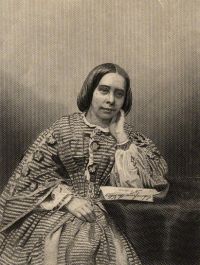 Marianne Farningham,
Grace Darling, Heroine of the Farne Islands
“ Altogether the Englishman has reason to be thankful that his island home, so girt about with dangerous sands and rocks, is yet so guarded by its friendly lights that the mariner, going or returning, may be warned of the hindrances to progress, and the "terror by night," which lie hidden under the pitiless, deceitful waters. ”
 Nathaniel Hawthorne,
The Atlantic Monthly
(1866)
“ The owner of such an island must have a peculiar sense of property and lordship; he must feel more like his own master and his own man than other people can. Other islands, perhaps high, precipitous, black bluffs, are crowned with a white light-house, whence, as evening comes on, twinkles a star across the melancholy deep,—seen by vessels coming on the coast, seen from the mainland, seen from island to island. Darkness descending, and looking down at the broad wake left by the wheels of the steamboat, we may see sparkles of sea-fire glittering through the gloom. ”
 Samuel Johnson,
A Journey to the Western Islands of Scotland
“ The plenty of this Island enticed beggars to it, who seemed so burdensome to the inhabitants, that a formal compact was drawn up, by which they obliged themselves to grant no more relief to casual wanderers, because they had among them an indigent woman of high birth, whom they considered as entitled to all that they could spare. ”
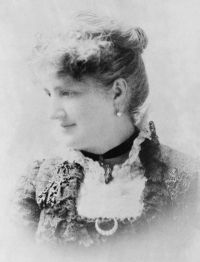 Marietta Holley,
Samantha at Coney Island, and a Thousand Other Islands
“ Frontenac Island used to be called Round Island, I guess because it wuz kinder square in shape. It is a handsome place with a immense hotel [A] settin’ back most a quarter of a mild, and jined by a long railed balcony with another, makin’ room enough, it seemed to me, for an army. The broad, handsome path leadin’ up to it wuz bordered with beautiful flowers and shrubs, lookin’ lovely against the vivid green of the lawn. ”
James Norman Hall, Faery Lands of the South Seas
“ On nearly every island they are dying to-day—a tragedy, an inevitable one, which the coming of the European has hastened, but not caused."Whether or not it may be accounted for on grounds of a distant kinship, it is impossible to stop long in the islands without absorbing, to a certain extent, the native point of view. Things which seemed rubbish at first slowly acquire significance; one begins to wonder if, after all, there may not be varieties of knowledge lost to us in the complexities of civilization.... ”
Anonymous, Famous Islands and Memorable Voyages
“ My father had lost two heifers, white were they, with black stars on their forehead and there were none like them in the island where we dwell. Long did we seek our missing kine, and great was our sorrow when we found them not; but last night I dreamed that I saw them feeding upon this island, the cliffs of which we can sometimes see from our home. When I awakened I persuaded my father to take the boat and let us row to the island.” “We found not our heifers,” said the old fisherman, smiling, “but, thank the good God, we found men. ”
Samuel Marsden, Memoirs of the Life and Labours of the Rev…
“ They sing, and read, and pray, and teach one another, so that there can be no fear that religion will be lost in the Islands again. The work has evidently been of God, and he will carry it on for his own glory. They will now also have their vessel, by which means they can visit the different islands and Port Jackson. I should wish much to see them turning their attention to agriculture, etc., so as to induce habits of industry among the natives, so that the natives of the Society Islands may rank with civilized nations. ”
Anonymous, Famous Islands and Memorable Voyages
“ Sometimes a passing ship would leave one or more of her crew, who were ill, that they might be restored by the vegetables and fruits, the pure air and clear water of the island. It happened once, nearly ninety years after the first discovery, that an English crew landed for refreshment, and wandering about the island approached the little church. They believed themselves the only human beings on the island, and were therefore greatly surprised to hear a voice singing within the church. ”
Viscount James Bryce Bryce, South America: Observations and Impressions
“ To the south the bare peaks of Desolation Island, beginning from Cape Pilar, rose with terrific boldness, unscaleable shafts and towers of rock that recalled the shapes of the Coolin hills in Skye or the still loftier summits of the Lofoten Isles in Norway. To the north a mysterious fringe of islands and foam-girt reefs, grey and dim among their mists, hid the entrance to Smyth's Channel and the labyrinth of almost unexplored sounds and inlets along the Chilean coast beyond. ”
F.R.G.S. John Foreman, The Philippine Islands
“ However, to a certain degree, the characteristic indolence of these Islanders is less dependent on themselves than on natural law, for the physical conditions surrounding them undoubtedly tend to arrest their vigour of motion, energy of life, and intellectual power. ”
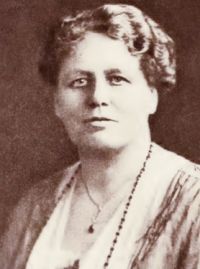 Katherine Routledge,
The mystery of Easter island: the story of an expedition
(1919)
“ The great ahu which have so far been described are only a part, although the most imposing portion, of the stone remains of the island. It is fortunate for the student that when civilisation appeared the natives were gathered into one settlement, for they left behind them, sprinkled over the island, various erections connected with their original domestic life. ”
Pliny Miles, Norðurfari; or, Rambles in Iceland
“ A precipitous path leads to the top of the island, where the people, with their habitations, a few sheep, and their little church, remain two thousand feet above the ocean. The islands are basaltic, like Fingal’s Cave and the Giant’s Causeway; but, instead of being one or two hundred feet in height, rise like immense columns, nearly half a mile above the sea. The inhabitants draw their entire subsistence from the ocean and the cliffs, catching codfish and killing sea-birds, myriads of which haunt the rocks of their sea-girt shores. The sea-fowl furnish large quantities of feathers. ”
Frank Coffee, Forty Years On The Pacific — Other Islands (1920)
“ The most tantalizing archeological puzzle of the Pacific is Easter Island, with its strange images of stone, ancient dwellings and antediluvian caves. Dropped at haphazard in the sea, a thousand miles from anywhere, and owing a passive allegiance to the Chilean Government, Easter Island is one of the wonders of the world, and holds a secret that no man has yet read. ”
Marianne Farningham,
Grace Darling, Heroine of the Farne Islands
“ Not a tree nor a bush, hardly a blade of grass, is to be seen. The islands are twenty-five in number, many of them with a sheer frontage to the sea of from six to eight hundred feet. They mostly lie north and south, parallel with each other; a few of the smaller ones extend to the north of the larger, thus rendering the navigation in their neighbourhood still more dangerous. The sea rushes at the rate of six or eight miles an hour through the channel between the smaller islands; and previous to the erection of a lighthouse there, many distressing shipwrecks occurred. ”
 Constance Frederica Gordon Cumming,
A Lady's Cruise in a French Man-of-War
(1882)
“ If you open the map of the world and rule a transverse line, passing through the Sandwich Islands in the North Pacific and the Friendly Isles in the South, you will perceive that the groups lying to the east are the Navigators, Fiji, the Hervey Isles, Tahiti, the Paumotu, the Marquesan, the Austral Isles, and New Zealand, every one of which is peopled by comparatively fair-skinned races, with hair which by nature is straight and black, although in many of the isles, as in Samoa, custom requires that it should be dyed or bleached, cut short and stiffened, so as to produce the effect of a wig. ”
William Henry Babcock, Legendary Islands of the Atlantic…
“ That the same name should be carried farther afield and applied to a remote island of the Atlantic Ocean is quite in accordance with the natural course of things and the general experience of mankind. No doubt the name Man might be derived from other sources, but the chances are in this instance that the Irish people whose navigators found Brazil Island (or imagined it, if you please) did the same favor for the crescent-shaped “Man,” quite overriding for a hundred years any preceding or competing titles. ”
Herbert Strang, Palm Tree Island
“ It was certain we could not build on those parts of the island that were bare rock, for we could not by any means dig foundations in it, and a hut without foundations, in an exposed place, might be carried away in a hurricane, and hurled into the sea, and we in it. And then it came into my mind that if we built too high upon the island, our dwelling might be spied by the savages of the neighbouring islands of which I have spoken, for we could not doubt that they were inhabited, and the people would certainly put to sea sometimes in their canoes. ”
