“ And moreover Gosson's style does not read like an imitation of Lyly. The same tricks and affectations are employed, but they are employed differently and perhaps more effectively.Lyly is again found in contact with the Spanish atmosphere, as one of the dependents of the Earl of Oxford, who patronized Robert Baker, George Baker, and Anthony Munday, who were all under the "spell of the peninsula [39] ." ”
Quotes about “George Lyly”
 George Saintsbury,
A History of Elizabethan Literature
“ Everybody speaks in antitheses, and the intolerable fancy similes, drawn from a kind of imaginary natural history, are sometimes as prominent as in Euphues itself. Lyly's theatre represents, in short, a mere backwater in the general stream of dramatic progress, though not a few allusions in other men's work show us that it attracted no small attention. With Nash alone, of the University Wits proper, was Lyly connected, and this only problematically. He was an Oxford man, and most of them were of Cambridge; he was a courtier; if a badly-paid one, and they all lived by their wits ”
George Saintsbury,
The English Novel
“ The journey from Naples to London, and the episode of Fidus and Iffida, could have been worked up, in the good old three-volume days, to a most effective second volume. And the picture of the court, with the further loves of Philautus, Camilla, and the "violet" Frances, would supply a third of themselves even if Euphues were left out, though some livelier presentation of his character (which Lyly himself was obviously too much personally interested to make at all clear) would improve the whole immensely. ”
“ That which comedy before 1580 lacked, that which alone could round it off into a poetic whole, was the female element. "Comedy," writes George Meredith, "lifts women to a station offering them free play for their wit, as they usually show it, [98] when they have it, on the side of sound sense. The higher the comedy, the more prominent the part they enjoy in it." But the dramatist cannot lift them far; the civilized plane must lie only just beneath the comic plane; the stage cannot be lighted by woman's wit if the audience have not yet realised that brain forms a part of the feminine organism. ”
“ French prose, which developed from the speech of the Court, is a delicate instrument, capable of expressing the finest shades of meaning, while the styles of George Meredith and of Henry James show how difficult it is for a subtle intellect to move freely within the limitations of English prose. ”
“ So far we have been dealing with euphuistic tendencies only, since in the style of Ascham and his predecessors, alliteration and antithesis are not employed consistently, but merely on occasion for the sake of emphasis. Other marks of euphuism, such as the fantastic embroidery of mythical beasts and flowers, are absent. Even in North's Diall alliteration is not profuse, and similes from natural history are comparatively rare. In George Pettie, however, we find a complete euphuist before Euphues. ”
“ The drinking song, "Io Bacchus," which occurs in Mother Bombie, is undoubtedly, I think, modelled on one of these earlier student compositions; the reference to the practice of throwing hats into the fire is alone sufficient to suggest it. But it is as a writer of the lyric proper that Lyly is best known. No one but Herrick, perhaps, has given us more graceful love trifles woven about some classical conceit. Mr Palgrave has familiarized us with the best, Cupid and my Campaspe played, but there are others only less charming than this. The same theme is employed in the following ”
“ Persons of both sexes, outwardly at peace but inwardly armed to the teeth, meet together in some lady's house to discuss the subject so dangerous to both, and conversation conditioned by this fact inevitably becomes subtle, allusive, intense; for it derives its light and shade from the flicker of that fire which the company finds such a perilous fascination in playing with. Lyly's work does not exhibit quite such modernity as this, but we may truthfully say that his Euphues and his England is the psychological novel in germ. ”
“ He was frequently in debt and still more frequently in disgrace with the Queen and with his father-in-law. Dilettante, aesthete, and euphuist, he would naturally [87] attract the Oxford fop, and that Lyly attached himself to his clique disposes, in my mind at least, of all theories of his puritanical tendencies. Certainly a Nonconformist conscience could not have flourished in de Vere's household. One bond between the Earl and his secretary was their love of music—an art which played an important part in the beginning of our comedy. ”
“ Finally, inasmuch as the personality of an author is always more fascinating to me than his writings, I determined to attempt to throw some light, however fitful and uncertain, upon the man Lyly himself. The attempt was not entirely fruitless, for it led to the interesting discovery that the fully-developed euphuism was not the creation of Lyly, or Pettie, or indeed of any one individual, but of a circle of young Oxford men which included Gosson, Watson, Hakluyt, and possibly many others. ”
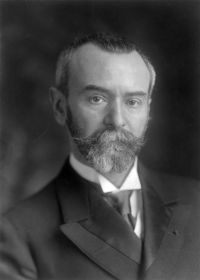 J. J. Jusserand,
The English Novel in the Time of Shakespeare
“ But what does it matter to Lyly? He writes for a select coterie, and when a man writes for a coterie, the protestations of the discontented, of the envious, alas! of those of good sense, too, are scarcely of any consequence. Let the common herd then shriek themselves hoarse at Lyly's door: it is shut fast, he will hear nothing, and is indifferent even if among this common herd Shakespeare figures. He is happy; "Euphues," in company with the little dogs, rumples the silken laps of ladies with the lace-plaited ruffs. ”
“ It was to Oxford's patronage, therefore, and not to his subsequent connexion with the "children of Powles," that Lyly owed his first dramatic impulse, and probably also his first dramatic success, for Campaspe and Sapho were produced at Court in 1582 [100] . His [88] appointment at the choir school of course confirmed his resolutions and thus he became the first great Elizabethan dramatist.But a purely circumstantial explanation of an important departure in a man's life will only appear satisfactory to fatalists who worship the blind god Environment. ”
“ It is interesting to learn that in 1579, according to the common practice of that day, he proceeded to his [7] degree of M.A. at Cambridge, though there is no evidence of any residence there [10] . Indeed we know from other sources that in 1578, or perhaps earlier, Lyly had taken up his position at the Savoy Hospital. It seems probable that he became again indebted to Burleigh's generosity for the rooms he occupied here—unless they were hired for him by Burleigh's son-in-law Edward de Vere, Earl of Oxford. ”
J. J. Jusserand,
The English Novel in the Time of Shakespeare
“ Yet after dinner, "Euphues" will still be agreeable to the ladies, adds Lyly, always smiling; if they desire to slumber, it will bring them to sleep which will be far better than beginning to sew and pricking their fingers when they begin to nod. [68] There is no possibility of error; with Lyly commences in England the literature of the drawing-room, that of which we speak at morning calls, productions which, in spite of vast and many changes, still occupy a favourite place on the little boudoir tables. ”
“ Lyle had capital credentials as a soldier; his domestic principles were but lightly touched upon. He had been “rather wild,” was “careless in expenditure,” etc. Sir John trusted that under Sir Adrian’s kind patronage he would “become steady;” in a word, the kind Sir Adrian, on reading the letters of introduction forwarded to him by Lady Amabel, on Lyle’s arrival at Cape Town was more inclined to pity than condemn the young man, and accordingly wrote, as we have seen, to his wife, requesting her to receive the new-comer with hospitality. ”
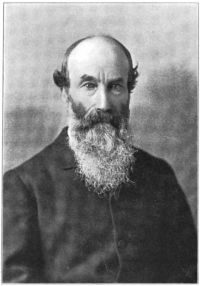 T. G. Bonney,
Charles Lyell and Modern Geology
“ The years, as must be the case when life's evening shadows are lengthening, begin to be more definitely chequered with losses and with rewards. In his letters, references to the death of friends become frequent. In 1862 Mrs. Horner, Lady Lyell's mother, died, and in 1864 her father, Leonard Horner, with whom, even for some years before becoming his son-in-law, Lyell had been in constant friendly correspondence, passed away in his eightieth year. In the same year Lyell was raised to the rank of baronet, and also occupied the presidential chair at the meeting of the British Association at Bath. ”
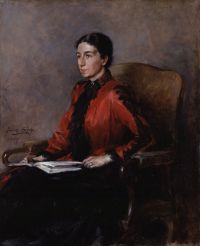 Mary Augusta Ward,
1911 Encyclopædia Britannica, Volume 17…
(1911)
“ LYLY (Lilly, or Lylie) , JOHN (1553–1606) , English writer, the famous author of Euphues, was born in Kent in 1553 or 1554. At the age of sixteen, according to Wood, he became a student of Magdalen College, Oxford, where in due time he proceeded to his bachelor’s and master’s degrees (1573 and 1575) , and from whence we find him in 1574 applying to Lord Burghley “for the queen’s letters to Magdalen College to admit him fellow.” The fellowship, however, was not granted, and Lyly shortly after left the university. ”
“ On the whole Lyly is most successful when he is drawing women, which was only as it should be, if we allow that the feminine element is the very pivot of true comedy. This he saw, and it is because he was the first to realise it and to grapple with the difficulties it entailed that the title of father of English comedy may be given him without the least reserve or hesitation. ”
J. J. Jusserand,
The English Novel in the Time of Shakespeare
“ We must also notice what pains Lyly gives himself to make his innovation a success, and so please his patronesses, and how he ornaments his thoughts and engarlands his speeches, how cunningly he imbues himself with the knowledge of the ancients and of foreigners, and what trouble he gives himself to improve upon the most learned and the most florid of them. ”
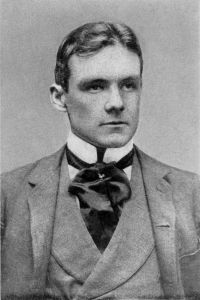 Richard Harding Davis,
Ranson's Folly (collection) — In the Fog
(1907)
“ I have often told Lyle that if he had not been a detective he would have made a great success as a poet or a playwright.“When Arthur turned on him, Lyle hesitated for a moment, and then told him exactly what was the case against him.“'Ever since your brother was reported as having died in Africa,' he said, 'your lordship has been collecting money on post-obits. Lord Chetney's arrival, last night, turned them into waste-paper. You were suddenly in debt for thousands of pounds—for much more than you could ever possibly pay. No one knew that you and your brother had met at Madame Zichy's. ”
“ His plays on the other hand, in the production of which he spent the better part of his life, greatly outweigh his novel both in aesthetic and historical importance. To attempt to estimate Lyly's position as a novelist and as a prose writer is to chase the will-o'-the-wisp of theory over the morass of uncertainty; the task of investigating his comedies is altogether simpler and more straightforward. After groping our way through the undergrowth of minor literature, we come out upon the great highway of Elizabethan art—the drama. ”
Arthur Bower Griffiths, Biographies of Scientific Men (1912)
“ As an epoch-maker, Sir Charles Lyell had to pass through the fire of hostile criticism. He knew, however, that he had discovered truth, as interpreted by Nature's book—the rocks—and that he could with equanimity listen to the babble of little minds. Moreover, he was entirely free from vanity, egotism, and jealousy—in fact, a true philosopher and gentleman, with kind feelings and appreciation for the work of others. Science owes much to Lyell, and for centuries to come, yea for all time, he will receive the homage of posterity. ”
Sidney Lee, Dictionary of National Biography… (1893)
“ Lyly on completing his studies went to London, and for many years he made energetic efforts to secure a place at court. At the same time—as early as 1578—he attempted literary work, and found a patron in Edward Vere, earl of Oxford. The first part of his ‘Euphues, the Anatomy of Wit’—his ‘first counterfaite’—was ‘hatched in the hard winter,’ apparently of 1578–9, and on its publication in London in 1579 he at once leaped into fame, although not into fortune. A second part—‘Euphues and his England’—followed in 1580. ”
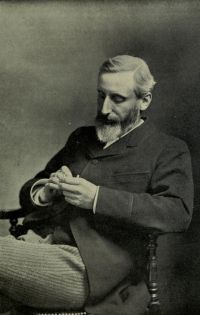 Grant Allen,
Popular Science Monthly
(1882)
“ Ninety-nine people out of a hundred, put in Lyell's place, would have been nothing better than masters of fox-hounds or slaughterers of tame pheasants. When one thinks of the life-work performed by such men as Lyell and the great band of thinkers to which he belonged, one sees only the best side of wealth and position: one feels for a moment half inclined to thank the constitution of things as they are here in England for the chance it offers to such broad-minded and comprehensive workers as these. ”
Representative English Comedies…
“ No preceding play is so full of charming and lasting lyrics. In all his comedies except The Woman in the Moone, Lyly writes neither in the usual jingling rhymes nor the infrequently used blank verse, but in prose. He shows the men of his day new possibilities in dialogue; for though his artificial style prevents easy characterisation, it does not keep him from effective repartee and a closer representation of the give and take of real conversation than was possible with the rhyming lines, or with blank verse as it was handled in his day. ”
“ All his work was more "art than nature," some of it was "more labour than art." On the [124] technical side his dramatic advance is immense, but we may look in vain in his dramas for any of that appreciation of the elemental facts of human nature which can alone create enduring art. In their characterization, Lyly's plays do little more than form a link between Shakespeare and the old morality. This comes out most strongly in their peculiar method of character grouping. By a very natural process the moral type is split up with the intention of giving it life and variety. ”
“ It is as if our author nets Mars with Venus, and presents the shamefaced god as an offering of flattery to the Queen and her Court. Campaspe is, in fact, the first romantic drama, not only the forerunner of Shakespeare, but a remote ancestor of Hernani and the 19th century French theatre. "The play's defect," says Mr Bond, "is one of passion"—a criticism which is applicable to all Lyly's dramas; and yet we must not [101] forget that Lyly was the earliest to deal with passion dramatically. The love of Alexander is certainly unemotional, not to say callous ”
“ Can you conceive a man afterwards boasting of this trick? It was Lyle who had made the animal plunge that he might rescue me, and thus place me under a supposed obligation for my life!My mother insisted on my going into society—she was doubtless right; but you know what society consists of in a great garrison,—a few ladies, crowds of gentlemen, and some women, whose friendship is far from desirable; I believe some of the latter were unsparing in their scandalous chronicles of Cape Town, when Mrs Rashleigh and I were both made subjects of remark. ”
Grant Allen,
Popular Science Monthly
(1882)
“ The firstborn of a wealthy and cultivated family, with ample means and ample leisure, endowed by nature with literary and scientific potentialities, brought up in the stimulating atmosphere of his own home, of Oxford, and of the London literary world, surrounded from his childhood upward by men of science and men of letters, it would have been strange if Charles Lyell had not turned out exactly such a man as we all know him to have been. ”
“ Certainly Euphues does not prove that Puritanism was latent in him. The moral [72] atmosphere which pervades it was not of Lyly's invention; he inherited it from his predecessors Guevara and Castiglione, and he employed it because he knew that it was expected of him. That he moralized not so much from conviction as from convention (to use a euphuism) , is, I think, sufficiently proved by the fact that in the second part of his novel, where he is addressing a new public, the pulpit strain is much less frequent, while in his plays it entirely disappears. ”
