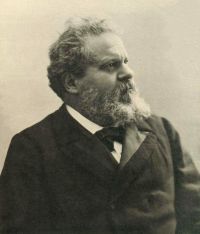
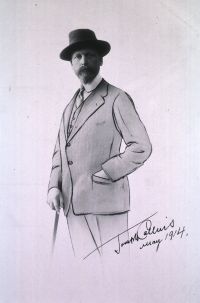
Giuseppe Giacomo Carducci

Definition and stakes

Mary Arms Edmonds,  Poems of Italy: selections from the Odes of Giosue Carducci… (1906)

“ In glancing over the record of Carducci's life, as reflected both in his acts and in his work, one is impressed chiefly, I think, by the unity of principle which underlies its many phases. His poetry and prose voice, through all variety of form and subject, one creed; his actions, often contradictory in appearance, spring from one source. He is always the poet—the challenger of the world's smallnesses, compromises, hypocrisies; the seeker after the beautiful, the high, the true, whether found in king's palace or peasant's hut, in Christian church or pagan temple. ”
Source: Wikisource

1911 Encyclopædia Britannica (1911)

“ And in 1906 he was awarded the Nobel prize for literature. He died at Bologna on the 16th of February 1907. By his marriage in 1859 he had two daughters, who survived him, and one son, who died in infancy.
The same qualities which placed Carducci among the classics of Italy in his earlier days remained consistently with him in later life. His thought flows limpid, serene, sure of itself above an undercurrent of sane and vigorous if pagan philosophy. Patriotism, the grandeur of work, the soul-satisfying power of justice, are the poet’s dominant ideals.
”
Source: Wikisource

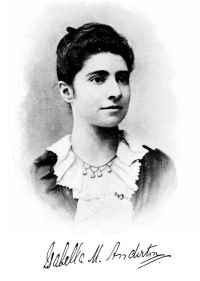
Portrait of Isabella Mary Anderton Isabella Mary Anderton,  Tuscan folk-lore and sketches, together with some other papers

“ It must not be thought, however, that Carducci can emit nothing but fire and smoke. From the lurid “Giambi” we can turn for relief to the exquisite little word-pictures of the “Odi Barbare” and of many of the poems published in the collections entitled “Levia Gravia” and “Rime Nuove.” It is in these that Carducci’s sense of nature, frank classic paganism, united curiously, however, to a certain German sentimental pessimism, and his extraordinary power of word-sculpture reveal themselves. ”
Source: Gutenberg

Get perspective with Kwize: daily news enlightened by great literature