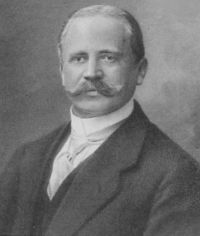
Friedrich von Klopstock

Definition and stakes

1911 Encyclopædia Britannica, Volume 15… (1911)

The offer was accepted; on his way to the Danish capital Klopstock met at Hamburg the lady who in 1754 became his wife, Margareta (Meta) Moller, (the “Cidli” of his odes) , an enthusiastic admirer of his poetry. His happiness was short; she died in 1758, leaving him almost broken-hearted. His grief at her loss finds pathetic expression in the 15th canto of the Messias. The poet subsequently published his wife’s writings, Hinterlassene Werke von Margareta Klopstock (1759) , which give evidence of a tender, sensitive and deeply religious spirit. Klopstock now relapsed into melancholy
Source: Wikisource

Roundell Palmer 1911 Encyclopædia Britannica (1911)

Klopstock, the author of the Messiah, cannot be considered great as a hymn-writer, though his “Sabbath Hymn” (of which there is a version in Hymns from the Land of Luther) is simple and good. Generally his hymns (ten of which are translated in Klopstock.Sheppard’s Foreign Sacred Lyre) are artificial and much too elaborate.
Of the “romantic” school, which came in with the French Revolution, the two leading writers are Friedrich Leopold von Hardenberg, called “Novalis,” and Friedrich de la Motte Fouqué, the celebrated author of Undine and Sintram—both romance-writers, as well as poets.
Source: Wikisource

The German Classics of the Nineteenth and Twentieth Centuries…

It was Klopstock who accomplished the most; he created a new, a lofty poetic language, which was to be recognized, not by the use of conventional metaphors and swelling hyperboles, but by the direct expression of a highly exalted mood. However, the danger of a forced overstraining of the language was combatted by Christoph Martin Wieland, who formed a new and elegant narrative prose on Greek, French, and English models, and also introduced the same style into poetic narrative, herein abetted by Friedrich von Hagedorn as his predecessor and co-worker.
Source: Gutenberg

Get perspective with Kwize: daily news enlightened by great literature