Glossin

Definition and stakes

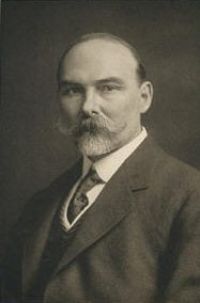
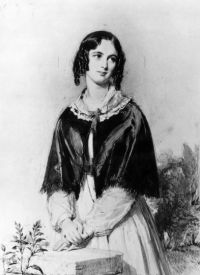
Portrait of Walter Scott Walter Scott,  Guy Mannering; or, The Astrologer…

“ Mac-Morlan or some other person will take the matter up; he will be detected, convicted, and will tell all in revenge!’
While these racking thoughts glided rapidly through Glossin’s mind, he observed one of the lights obscured, as by an opaque body placed at the window. What a moment of interest! ‘He has got clear of his irons! he is working at the stancheons of the window! they are surely quite decayed, they must give way. O God! they have fallen outward, I heard them clink among the stones! the noise cannot fail to wake them.
”
Source: Gutenberg

Friedrich Kluge,  An Etymological Dictionary of the German Language (1891)

“ A stem glint- is wanting in the rest of the Teutonic dialects unless the cognates of glatt (Gothic *glada-) are allied.
Glas, neuter, ‘glass, tumbler,’ from the equivalent Old High German and Middle High German glas, neuter; a common Teutonic word unknown to the other Aryan groups; compare Old Saxon gles, Dutch glas, Anglo-Saxon glœs, English glass; allied to Old Icelandic gler, neuter, ‘glass,’ with the change of s to r, which proves the word to be primitively Teutonic (*glaza- and *glasa- in Gothic) .
”
Source: Wikisource

John Henry Hessels,  1911 Encyclopædia Britannica, Volume 12… (1911)

“ During the 6th, 7th and 8th centuries glossography developed in various ways; old glossaries were worked up into new forms, or amalgamated with more recent ones. It ceased, moreover, to be exclusively Latin-Latin, and interpretations in Germanic (Old High German, Anglo-Saxon) and Romanic dialects took the place of or were used side by side with earlier Latin ones. The origin and development of the late classic and medieval glossaries preserved to us can be traced with certainty. ”
Source: Wikisource

Get perspective with Kwize: daily news enlightened by great literature