Gongorism

Definition and stakes

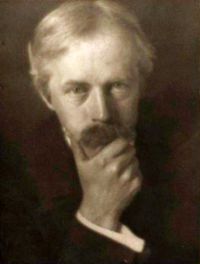
Portrait of Émile Faguet Émile Faguet,  Initiation into Literature

“ Gongorism belongs to every epoch, and in each epoch is the means of scaring away the crowd, of obtaining a small band of enthusiastic admirers, and of being able to scorn the suffrage of the multitude. Gongora, both in Spain and in France, found devoted admirers and imitators.
LOPE DE VEGA.—Lope de Vega was one of the greatest of the world's poets, although he was intelligible.
”
Source: Gutenberg

James Fitzmaurice-Kelly,  A History of Spanish Literature

“ It took Spain a hundred years to rid her veins of the Gongoristic poison, and Gongorism has now become, in Spain itself, a synonym for all that is bad in literature. Undoubtedly Góngora did an infinite deal of mischief: his tricks of transposition were too easily learned by those hordes of imitators who see nothing but the obvious, and his verbal audacities were reproduced by men without a tithe of his taste and execution. And yet, though it be an unpopular thing to confess, one has a secret sympathy with him in his campaign. Lope de Vega and Cervantes are as unlike as two men may be ”
Source: Gutenberg

James Fitzmaurice-Kelly,  A History of Spanish Literature

“ They refuse to admit that Lord Berners' or North's translations of Guevara could have produced the effects ascribed to them; and they argue with much reason that Gongorism is but the local form of a disease which attacked all Europe. However that may be, there can exist no possible connection between English Euphuism and Spanish Gongorism, save such as comes from a common Italian origin. Gongorism derives directly from the Marinism propagated in Spain by Carrillo, though it must be confessed that Marino's extravagances pale beside those of Góngora. ”
Source: Gutenberg

Get perspective with Kwize: daily news enlightened by great literature