Greco-Roman mysteries

Definition and stakes

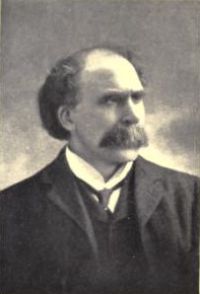
Portrait of Clifford Herschel Moore Clifford Herschel Moore,  Pagan Ideas of Immortality During the Early Roman Empire

“ We may fairly say that, in spite of popular doubt, intellectual scepticism, and philosophic denial, beliefs in some kind of existence beyond the grave were widespread in the Greco-Roman world at the beginning of our era. For many, probably for most, belief did not advance beyond inherited intuitions, fears, or hopes, which were fostered by tendance of the dead, prescribed by immemorial custom. Many, both the simple and the learned, found their assurance in diverse forms of Greek mysteries ”

Source: Gutenberg

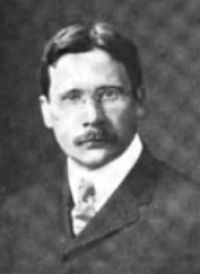
Portrait of Clifford Herschel Moore Clifford Herschel Moore,  The Religious Thought of the Greeks…

“ Whatever may have been the reason, whether the common longing for mystic assurance of safety and salvation had come naturally to the front in the Roman and Italian mind, or whether the large number of Greeks, slaves, traders, and other members of the lower and immigrant classes had moved the natives by mystic practices which they had brought with them, certain it is that a considerable part of the Romans found no satisfaction for their deeper longings in the traditional religion, and turned to a form of the Greek mysteries. ”
Source: Gutenberg

Various,  The Atlantic Monthly, Volume 08…

“ It is now proposed briefly to relate how this line was lost, when the politeness and philosophy, the literature and the Art of Greece were chained to the triumphal cars of Roman conquerors,—and how it seems to have been found again in our own day, after slumbering so long in ruined temples, broken statues, and cinerary urns.
The scholar who studies the aesthetical anatomy of Greek Art has a melancholy pleasure, like a surgeon, in watching its slow, but inevitable atrophy under the incubus of Rome.
”
Source: Gutenberg

Get perspective with Kwize: daily news enlightened by great literature