Greco-Roman religion

Definition and stakes

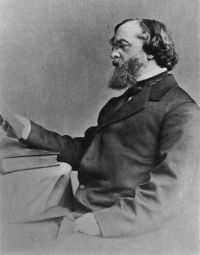
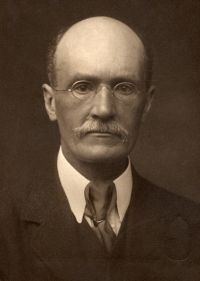
Portrait of Clifford Herschel Moore Clifford Herschel Moore,  The Religious Thought of the Greeks…

“ This did not mean, however, that men had lost their religious longing. Far from it. For there is abundant proof that under the stimulus of Greek philosophy and mysticism, questionings as to the nature of man, his relation to divinity, and his immortality became more earnest. To these questions the Greco-Roman religion offered no answer.
The oriental gods, however, were of a very different sort from those of Greece and Rome: they required a spiritual devotion on the part of their devotees and they made strong appeals to the religious emotions.
”

Source: Gutenberg

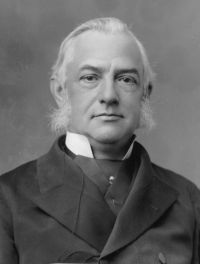
Portrait of J. Gresham Machen J. Gresham Machen,  The Literature and History of New Testament Times

“ New gods could easily be identified with the old, or else be received along with them without a conflict. The religion of the Greco-Roman world is therefore different from that of ancient Greece. It is a curious mixture of the most diverse beliefs. Nevertheless, the whole deserves to be called Hellenistic, because even the most strikingly non-Grecian elements were usually subjected more or less to the subtle molding of the Greek spirit. ”
Source: Gutenberg

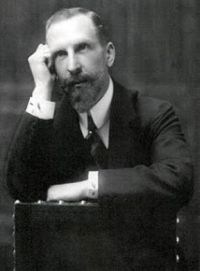
Portrait of James Freeman Clarke James Freeman Clarke,  Ten Great Religions: An Essay in Comparative Theology

“ The beauty of nature, the charm of art, the genius of man, were idealized and deified in the Greek pantheon. The divinity of law, organizing human society according to universal rules of justice, was the truth in the Roman religion. The defect of the Greek theology was the absence of a central unity. Its polytheism carried variety to the extreme of disorder and dissipation. The centrifugal force, not being properly balanced by any centripetal power, inevitably ends in dissolution. The defect of Roman worship was, that its oppressive rules ended in killing out life. ”
Source: Gutenberg

Get perspective with Kwize: daily news enlightened by great literature