“ What's the sense in anybody keeping straight? Fellows that don't seem to get along just as well as those that do. What do you think, Mel? You've been reading Havelock Ellis and a lot of ducks like that."Burbank tossed a cigarette butt into the fire and gazed into the flames for a minute before speaking, his homely face serious and troubled. "I don't know what to think," he replied slowly. "Ellis tells about some things that make you fairly sick. So does Forel. The human race can be awfully rotten. ”
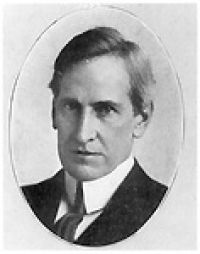
Havelock Ellis
Definition and stakes
Havelock Ellis (1859–1939), a British physician and social reformer, pioneered modern sexology through his investigations into human sexuality, same-sex attraction, and gender identity. His 1897 work Sexual Inversion challenged Victorian morality by portraying homosexuality as a natural variation rather than a disorder. Ellis also introduced terms such as autoeroticism and eonism, shaping the field of psychoanalysis.
While figures like Emma Goldman referenced his writings on crime and social context, others, such as Ralph Werther, criticized his reliance on biological explanations. His eugenicist perspectives, though contentious, stemmed from his commitment to social hygiene. Ellis’s legacy lies in his empirical approach to human sexuality, connecting scientific inquiry with social change, even as his theories ignited controversy.
Quotes about “Havelock Ellis”
 Havelock Ellis,
Love and Pain — Volume 2
(1913)
Havelock Ellis,
Love and Pain — Volume 2
(1913)
“ The Countess was a beautiful but wanton creature, and the child adored her, impressed alike by her beauty and the costly furs she wore. She accepted his devotion and little services and would sometimes allow him to assist her in dressing; on one occasion, as he was kneeling before her to put on her ermine slippers, he kissed her feet; she smiled and gave him a kick which filled him with pleasure. Not long afterward occurred the episode which so profoundly affected his imagination. ”
 Emma Goldman,
Anarchism and Other Essays
(1910)
Emma Goldman,
Anarchism and Other Essays
(1910)
“ There is close relation, says Havelock Ellis, between crimes against the person and the price of alcohol, between crimes against property and the price of wheat. He quotes Quetelet and Lacassagne, the former looking upon society as the preparer of crime, and the criminals as instruments that execute them. The latter find that "the social environment is the cultivation medium of criminality; that the criminal is the microbe, an element which only becomes important when it finds the medium which causes it to ferment; EVERY SOCIETY HAS THE CRIMINALS IT DESERVES." ”