“ HERMOGENES: That is true. SOCRATES: Do you observe that only the ancient form shows the intention of the giver of the name? of which the reason is, that men long for (imeirousi) and love the light which comes after the darkness, and is therefore called imera, from imeros, desire. HERMOGENES: Clearly. SOCRATES: But now the name is so travestied that you cannot tell the meaning, although there are some who imagine the day to be called emera because it makes things gentle (emera different accents) . ”
Hermogenes
Definition and stakes
Hermogenes is a multifaceted figure explored across literature, philosophy, and architecture, often as an interlocutor or innovator. In Plato’s Cratylus, he engages Socrates in discussions on etymology, embodying intellectual openness to linguistic theories. Xenophon portrays him in social contexts, such as symposia, where his relationships and character are examined.
Vitruvius attributes him with architectural principles, connecting him to structural advancement. These varied depictions—ranging from philosophical dialogue to practical craft—highlight Hermogenes’ enduring presence as both a symbol of inquiry and a contributor to diverse fields, reflecting the complexity of human legacy.
Quotes about “Hermogenes”
Petronius Arbiter, The Satyricon — Volume 02: Dinner of Trimalchio
“ Why, Hermogenes could trim the claws of a flying hawk, and no snake ever hatched out a rope yet! And look at Glyco! He's smoked himself out in fine shape, and as long as he lives, he'll carry that stain! No one but the devil himself can wipe that out, but chickens always come home to roost. ”
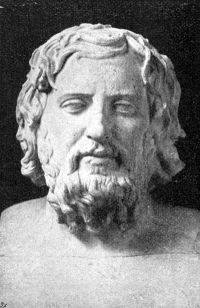 Xenophon,
Symposion or The Banquet
Xenophon,
Symposion or The Banquet
“ The remark drew forth a peal of laughter from the company, who thought the speaker hit the truth exactly.Then some one: It lies with you, Hermogenes, to tell us who your friends are; and next, to demonstrate the greatness of their power and their care for you, if you would prove to us your right to pride yoruself on them.Herm. That the gods know all things, that the present and the future lie before their eyes, are tenets held by Hellenes and barbarians alike. This is obvious ”