Highland Scots

Definition and stakes

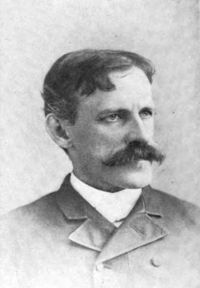
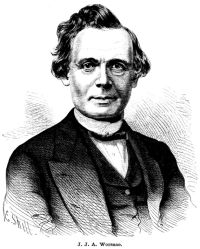
Portrait of Jens Jacob Asmussen Worsaae Jens Jacob Asmussen Worsaae,  An Account of the Danes and Norwegians in England…

“ The hardy Highland Scots, a great part of whom do not understand, or at all events do not speak English, but still commonly use the Celtic or Gaelic tongue, live here thinly scattered in poor and low peat cabins, which it is often difficult to distinguish from the surrounding rocks. The Highlanders in the districts farthest towards the west and north have preserved their language and other national characteristics purest; for farther towards the Lowlands, a more modern civilization has gradually forced its way forwards, in spite of the mountains. ”
Source: Gutenberg

Donald William Stewart,  Old and rare Scottish tartans (1893)

“ Just as among the Scots we find two distinct tongues, so we likewise find two different [4] ways of life and conduct. For some are born in the forests and mountains of the north, and these we call men of the Highland, but the others men of the Lowland. By foreigners the former are called Wild Scots, the latter householding Scots. The Irish tongue is in use among the former, the English tongue among the latter. ”
Source: Gutenberg

Portrait of James Harvey Robinson James Harvey Robinson,  An Introduction to the History of Western Europe

“ The conquest of Scotland proved a far more difficult matter than that of Wales. The early history of the kingdom of [Pg 279] Scotland is a complicated one. When the Angles and Saxons landed in Britain, a great part of the mountainous region north of the Firth of Forth was inhabited by a Celtic tribe, the Picts. There was, however, on the west coast a little kingdom of the Irish Celts, who were then called Scots. By the opening of the tenth century the Picts had accepted the king of the Scots as their ruler, and the annalists begin to refer to the highland region as the land of the Scots. ”
Source: Gutenberg

Get perspective with Kwize: daily news enlightened by great literature