Immalee

Definition and stakes

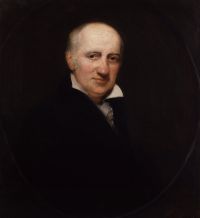
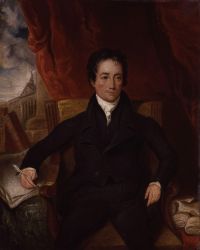
Portrait of Charles Robert Maturin Charles Robert Maturin,  Melmoth the Wanderer, Vol. 3

“ It was with much difficulty she was made to comprehend the meaning of these words, but when she did, she exclaimed, “Oh, that I could live in that world, for I would make every one happy!”—“But you could not, Immalee,” said the stranger; “this world is of such extent that it would take your whole life to traverse it, and, during your progress, you never could be conversant with more than a small number of sufferers at a time, and the evils they undergo are in many instances such as you or no human power could relieve.” At these words, Immalee burst into an agony of tears. ”
Source: Gutenberg

Portrait of Charles Robert Maturin Charles Robert Maturin,  Melmoth the Wanderer, Vol. 3

“ The stranger feeling did not dwell long in a mansion it was unused to. The expression was soon exchanged for that half-ironical, half-diabolical glance Immalee could not understand. “And you live here alone,” he said, “and you have lived in this beautiful place without a companion?”—“Oh no!” said Immalee, “I have a companion more beautiful than all the flowers in the isle. There is not a rose-leaf that drops in the river so bright as its cheek. My friend lives under the water, but its colours are so bright. ”
Source: Gutenberg

Niilo Idman,  Charles Robert Maturin: His Life and Works (1923)

“ Yet there can be no question of direct imitation. Immalee is original and romantic, she belongs as distinctly to the 19:th century as her prototype does to the 18:th. Maturin, as was his wont, made the case an extreme one; his heroine lives wholly by herself, taught and nurtured by nature alone, without a parent or philosopher to point out to her the benefits of such an education. And the character of Immalee, in all its fantasticalness, has infinitely more of ‘nature’ in it than there is in the tedious conventionalism of Virginie ”
Source: Gutenberg

Get perspective with Kwize: daily news enlightened by great literature