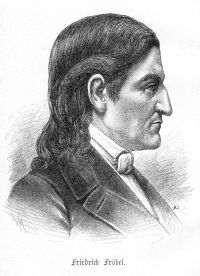
Johann Heinrich Pestalozzi

Definition and stakes

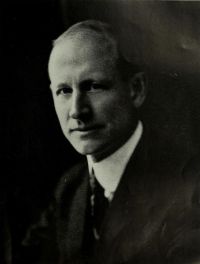
Portrait of Frank Pierrepont Graves Frank Pierrepont Graves A student's history of education

Pestalozzi’s Philanthropic and Industrial Ideals.—Johann Heinrich Pestalozzi was born at Zurich in 1746. After the death of his father, he was brought up almost altogether by his mother. Through her unselfishness Example of mother and grandfather, and piety, and the example of his grandfather, pastor in a neighboring village, Pestalozzi was inspired to relieve and elevate the degraded peasantry about him. He first turned to the ministry as being the best way to accomplish this philanthropic purpose, and later took up the and early attempts to elevate the peasantry.
Source: Gutenberg

1911 Encyclopædia Britannica, Volume 21… (1911)

His earliest years were spent in schemes for improving the condition of the people. The death of his friend Bluntschli turned him however from politics, and induced him to devote himself to education. He married at twenty-three and bought a piece of waste land at Neuhof in Aargau, where he attempted the cultivation of madder. Pestalozzi knew nothing of business, and the plan failed.
Source: Wikisource

Portrait of Philip E. Muskett Philip E. Muskett The Art of Living in Australia… (1893)

Not so long afterwards, in 1801, Johann Heinrich Pestalozzi, permeated with the atmosphere following the French Revolution, gave to the world his views on education in his work HOW GERTRUDE TEACHES HER CHILDREN. The essence of his belief being that “sense-impression is the foundation of instruction,” he counselled the development of all the faculties in preference to the mere acquisition of words. “Words alone,” said he, “cannot give us a knowledge of things; they are only useful for giving expression to what we have in our own minds.”
Source: Wikisource

Get perspective with Kwize: daily news enlightened by great literature