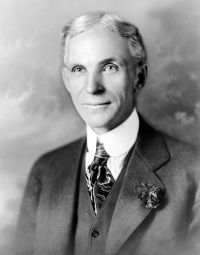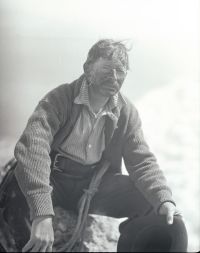
John Burroughs

Definition and stakes

Portrait of Dallas Lore Sharp Dallas Lore Sharp,  The Face of the Fields

“ In none of our nature-writers, however, is this love for the earth more manifest than in John Burroughs. It is constant and dominant in him, an expression of his religion. He can see the earth only as the best possible place to live in—to live with rather than in or on; for he is unlike the rector of Selborne and the wild-tame man of Walden in that he is married and a farmer—conditions, these, to deepen one’s domesticity. Showing somewhere along every open field in Burroughs’s books is a piece of fence, and among his trees there is always a patch of gray sloping roof. ”
Source: Gutenberg

Clara Barrus,  Our Friend John Burroughs

“ The first John Burroughs of whom I have any trace came from the West Indies, and settled in Stratford, Connecticut, where he married in 1694. He had ten children, of whom the seventh was John, born in August, 1705. My descent does not come from this John, but from his eldest brother, Stephen, who was born at Stratford in February, 1695. Stephen had eight children, and here another John turns up—his last child, born in 1745. His third child, Stephen Burroughs (born in 1729) , was a shipbuilder and became a noted mathematician and astronomer, and lived at Bridgeport, Connecticut. ”
Source: Gutenberg

Portrait of Dallas Lore Sharp Dallas Lore Sharp,  The Seer of Slabsides

“ This title, "The Seer of Slabsides," does not quite fit John Burroughs—the Burroughs I knew. He was a see-er. A lover of nature, he watched the ways of bird and beast; a lover of life, he thought out and wrought out a serene human philosophy that made him teacher and interpreter of the simple and the near at hand rather than of such things as are hidden and far off. He was altogether human; a poet, not a prophet; a great lover of the earth, of his portion of it in New York State, and of everything and everybody dwelling there with him. ”
Source: Gutenberg

Get perspective with Kwize: daily news enlightened by great literature