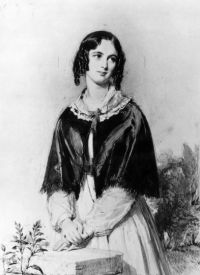
John Colet

Definition and stakes

J. H. Kurtz,  Church History, Volume 2 (of 3…

“ Humanism in England.―In England we meet with two men in the end of the 15th century, closely related to Erasmus, of supreme influence as humanists in urging the claims of reform within the Catholic church. John Colet in A.D. 1496 returned to England after a long sojourn in Italy, where he had obtained, not only humanistic culture, but also, through contact with Savonarola and Mirandola, a powerful religious impulse. He then began, at Oxford, his lectures on the Pauline epistles, in which he abandoned the scholastic method and returned to the study of Scripture and the Fathers. ”
Source: Gutenberg

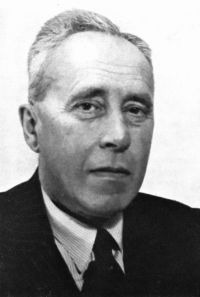
Portrait of Johan Huizinga Johan Huizinga,  Erasmus and the Age of Reformation

“ One could hardly find a better ex tempore speaker: a happy talent has complete command of a happy turn of speech. He has a present wit, always flying ahead, and a ready memory; and having all this ready to hand, he can promptly and unhesitatingly produce whatever the subject or occasion requires. In arguments he is unimaginably acute, so that he often puzzles the best theologians on their own ground. John Colet, a man of keen and exact judgement, often observes in intimate conversation that Britain has only one genius: although this island is rich in so many fine talents. ”
Source: Gutenberg

1911 Encyclopædia Britannica, Volume 6… (1911)

“ Besides the preferments above mentioned, he was rector of the gild of Jesus at St Paul’s and chaplain to Henry VIII.
Colet, though never dreaming of a formal breach with the Roman Church, was a keen reformer, who disapproved of auricular confession, and of the celibacy of the clergy. Though no great scholar or writer, he was a powerful force in the England of his day, and helped materially to disintegrate the medieval conditions still obtaining, and to introduce the humanist movement.
”
Source: Wikisource

Get perspective with Kwize: daily news enlightened by great literature