Korean language

Definition and stakes

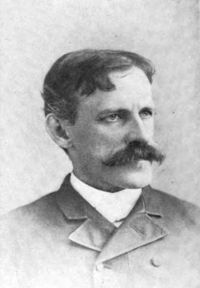
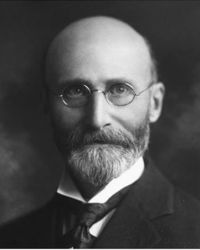
Portrait of Horace Newton Allen Horace Newton Allen,  Korean Tales

“ There are three great classes in Korea: the nobility, the middle class, and the commoners. A commoner, not of the proscribed orders, may rise to nobility by successfully passing the competitive examinations. The officials are appointed from the noble classes.
The language is peculiar to the country, and while written official documents are done in the common character of China and Japan, the spoken language of neither of these people is understood in Korea. The native language of Korea possesses an alphabet and grammar, and is polysyllabic, thus resembling English more than it does Chinese.
”
Source: Gutenberg

Homer Bezalee Hulbert,  The passing of Korea (1906)

“ A Korean sees about as much moral turpitude in a lie as we see in a mixed metaphor or a split infinitive. As for morality in its narrower sense, the Koreans allow themselves great latitude. There is no word for home in their language, and much of the meaning which that word connotes is lost to them. ”
Source: Wikisource

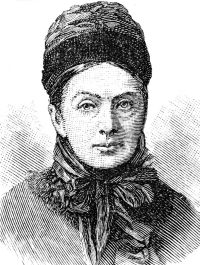
Portrait of Isabella L. Bird Isabella L. Bird,  Korea and her neighbors (1897)

“ En-mun, the Korean script, is utterly despised by the educated, whose sole education is in the Chinese classics. Korean has the distinction of being the only language of Eastern Asia which possesses an alphabet. Only women, children, and the uneducated used the En-mun till January, 1895, when a new departure was made by the official Gazette, which for several hundred years had been written in Chinese, appearing in a mixture of Chinese characters and En-mun, a resemblance to the Japanese mode of writing, in which the Chinese characters which play the chief part are connected by kana syllables. ”
Source: Gutenberg

Get perspective with Kwize: daily news enlightened by great literature