Maya (philosophy)

Definition and stakes

Portrait of George William Russell George William Russell,  Imaginations and Reveries

“ Almost as frequent as the changing of the bells were the changes from state to state. I realized what is meant by the Indian philosophy of Maya. Truly my days were full of Mayas, and my work-a-day city life was no more real to me than one of those bright, brief glimpses of things long past. I talk of the past, and yet these moments taught me how false our ideas of time are. In the Ever-living yesterday, today, and tomorrow are words of no meaning. ”
Source: Gutenberg

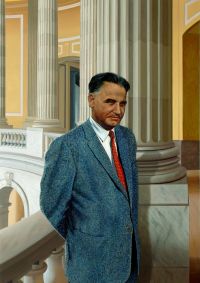
Portrait of Sarvepalli Radhakrishnan Sarvepalli Radhakrishnan,  The Philosophy of Rabindranath Tagore (1918)

“ Then the finite existence becomes a pathos, and nature a bondage from which we should escape. In the world of maya our individuality appears to be ultimate ; but if we overcome this illusion, we find our individual consciousness to be a unique expression of the universal. " Everything has this dualism of maya and satyam, appearance and truth. ... Our self is maya where it is merely individual and finite, where it considers its separateness as absolute ; it is satyam where it recognises its essence in the universal and infinite, in the supreme self, in Paramatman." ”
Source: Wikisource

Various,  The Atlantic Monthly, Volume 01…

“ With star-like eyes, proud lips, and erect head, Maya went out. Her laugh rang loud; her song soared in wild and mocking cadence to the stars; her rigid brow wore scorn like a coronal of flame; and with a scathed nature she trod the streets of the city, mixed with its wondering crowds, made the Spark a blaze and a marvel in all lands,— but hid the opal in her bosom ”
Source: Gutenberg

Get perspective with Kwize: daily news enlightened by great literature