“ THE MIDDLE KINGDOM The emperors of fourteen dynasties, clad in robes of yellow silk embroidered with the Dragon, wearing gold diadems set with pearls and rubies, and seated on thrones of incomparable ivory, have ruled over the Middle Kingdom for four thousand years.THE MILKY WAY My mother taught me that every night a procession of junks carrying lanterns moves silently across the sky, and the water sprinkled from their paddles falls to the earth in the form of dew. I no longer believe that the stars are junks carrying lanterns, no longer that the dew is shaken from their oars. ”
Middle Kingdom
Definition and stakes
The concept of the "Middle Kingdom" primarily refers to China, historically portrayed as a central, civilized region amid surrounding "barbarian" territories. Scholars such as Chang Chih-tung highlighted its cultural and intellectual heritage, encouraging the study of its dynastic records and literary customs. Meanwhile, Sartell Prentice used the term metaphorically to describe a European "Middle Empire" imagined during World War I.
John Lord and J. N. Larned, on the other hand, situated it within the feudal systems of medieval Europe, emphasizing the shift from imperial to noble rule. These differing perspectives illustrate the term's flexibility as a framework for analyzing civilization, authority, and historical continuity across various cultural contexts.
Quotes about “Middle Kingdom”
Earl of George Edward Stanhope Molyneux Herbert Carnarvon, Five Years' Explorations at Thebes
“ The richest interment of this type, in personal objects, was the one found by Prof. Petrie, [47] and the antiquities here were all characteristic of the time between the Middle Kingdom and the New Empire. ”
Chang Chih-tung, Gems of Chinese Literature — Education (1922)
“ They should examine the dynastic histories, in order to appreciate the various epochs of government and rebellion, as well as the manners and customs of the various parts of the empire. They should hunt through the body of general literature, in order to make themselves acquainted with the best examples of the learning of the Middle Kingdom. ”
“ Let every laboring man, skilled or unskilled, understand his own vital stake in the winning of this war.Now look at some of the issues of this war.You know Germany's dream of a Middle Empire; of a great new kingdom that is to stretch from the English Channel to the Persian Gulf, from the borders of Normandy through Mesopotamia. It is to include Northeastern France, Belgium, Luxemburg, Denmark, Holland, Germany, Austro-Hungary, parts of Switzerland and [Pg 20] Italy, Serbia, Roumania, Turkey, Armenia, Asia Minor and Mesopotamia. ”
John Lord, Beacon Lights of History, Volume 3 part 1…
“ The kingdoms of Germany, Italy, France, Burgundy, Lorraine, Navarre, all date to his memorable reign." But these mediaeval kingdoms were feudal; the power of the kings was nominal. Government passed from imperialism into the hands of nobles. The government of Europe in the Middle Ages was a military aristocracy, only powerful as the interests of the people were considered. Kings and princes did not make much show, except in the trappings of royalty,—in gorgeous dresses of purple and gold, to suit a barbaric taste,—in the insignia of power without its reality. ”
J. N. Larned, History for ready reference, Volume 4… (1895)
“ Part of these revived; the idea of central power under Charles the Great, and Otto his great successor; the appreciation of law, though not exclusively Roman law; the schools of learning. And under these conditions the new nations—some of mixed races, as in France, Spain, and Italy; others simple and homogeneous, as in Germany, England, and the Scandinavian peninsula —begin their apprenticeship of civilization." R. W. Church, The Beginning of the Middle Ages, chapter 1. "The simple facts of the fall of the Empire are these. The Imperial system had been established ... to protect the frontier. ”
 James Harvey Robinson,
An Introduction to the History of Western Europe
“ The Church had, in a way, taken the place of the Roman Empire by holding the various peoples of western Europe together under the headship of the pope and by assuming the powers of government during the period when the feudal lords were too weak to secure order and justice. Organized like an absolute monarchy, the Church was in a certain sense far the most powerful state of the Middle Ages. ”
John Lord, The Old Roman World : the Grandeur and Failure of Its Civilization
“ It is seldom that any nation is allowed to have a great ascendency over other nations unless the general influence of the dominant State is favorable to civilization; and when this influence is perverted the ascendency passes away. This is remarkably seen in the history of the Persian, the Greek, and the Roman Empires, and still more forcibly in the empire of the popes in the Middle Ages, and of the vast influence of France and England during the last hundred years. ”
Emil Reich, The Cambridge Modern History, Volume 1… (1902)
“ The Middle Ages knew only of two "universals" in politics, the Empire proper, that is, the Holy Roman Empire, and the Catholic Church; the Byzantine Empire having little if anything to say in questions of Western policy since the days of Charlemagne. ”
 George Park Fisher,
Outlines of Universal History, Designed as a Text-book and for Private Reading
“ The emperors, the heads of the Holy Roman Empire, were the chief secular rulers in the Middle Ages, and were in theory the sovereigns of Christendom. But in the era of the Crusades, the kingdoms of England and France began to be prominent. In them, moreover, we see beginnings of an order of things not embraced in the mediaeval system. In France, steps are taken towards a compact monarchy. In England, there are laid the foundations of free representative government. ”
James Harvey Robinson,
An Introduction to the History of Western Europe
“ No one can hope to understand the Middle Ages who does not first learn something of the Roman Empire, within whose bounds the Germans set up their kingdoms and began the long task of creating modern Europe. ”
 Brooks Adams,
The Law of Civilization and Decay…
(1896
| notes)
“ A considerable body of Europeans were thus driven in like a wedge between Egypt and the Greek Empire, the two highest civilizations of the Middle Ages, while in front lay the Syrian cities of the plain, with whom the Christians were at permanent war. ”
 Edward A. Freeman,
The Historical Geography of Europe…
“ The Empire, in short, though keeping its Roman titles and associations, and with them its influence over the minds of men, had practically become a German power. Its history from this time mainly consists in the steps by which the German Emperors of Rome lost their hold on their Italian and Burgundian kingdoms, and of the steps by which the German dominion was extended over the Slaves to the East. ♦France.♦ To the West the Western Kingdom has altogether{164} detached itself from the Empire ”
James Harvey Robinson,
An Introduction to the History of Western Europe
“ The grim fortresses of the mediæval lords, which appeared upon almost every point of vantage throughout western Europe during the Middle Ages, would not have been tolerated by the king, had he been powerful enough to destroy them. They plainly indicate that their owners were practically independent rulers. ”
 Edward B. Tylor,
Anthropology
(1881)
“ In invaded countries, lands of the conquered were distributed by the king or leader to be held by his captains or soldiers doing military service in return; the greatest and best-known example is the feudal system of Europe in the Middle Ages. ”
Various, The Catholic World, Vol. 02, October…
“ Where now in Europe, impatient and uneasy, a group of half-friendly nations jealously watches each other's progress and power, and the acquisition of a province threatens a general war, Rome maintained, from generation to generation, in tranquil sway, an empire of which Gaul, Spain, Britain, and North Africa, Switzerland, and the greater part of Austria, Turkey in Europe, Asia Minor, Syria, and Egypt formed but single limbs, members of her mighty body. ”
J. Fr. Michaud, The History of the Crusades (vol…
“ Nothing can be more complicated than the springs which set modern societies in motion; and he who would desire to explain the march of things by one single cause, must fall into great error. The same events do not produce always or everywhere similar effects; as may be seen by the picture we have traced of Europe in the middle ages. The holy wars assisted, in France, in abasing the great vassals, whilst feudal power received scarcely any injury from it in Germany and other countries. ”
James Harvey Robinson,
An Introduction to the History of Western Europe
“ The centuries prior to the age of Gregory VII and of William the Conqueror may, on account of their disorder and ignorance, be properly called the "dark ages," although they beheld some important stages in the transformation of Europe. The later Middle Ages, on the contrary, were a time of rapid and unmistakable progress in almost every line of human endeavor. Indeed by the end of the thirteenth century a great part of those changes were well under way which serve to make modern Europe so different from the condition of western Europe under the Roman Empire. ”
John Lord, Beacon Lights of History, Volume 05…
“ In the dark ages of European history, his reign affords a solitary resting-place between two dark periods of turbulence and ignominy, deriving the advantage of contrast both from that of the preceding dynasty and of a posterity for whom he had founded an empire which they were unworthy and unequal to maintain. ”
Emil Reich, The Cambridge Modern History, Volume 1… (1902)
“ The Holy Roman Empire was a fiction, or at best an ideal, lacking all the realities of power. In the face of that vague "Empire," the less ambitious but more practical smaller sovereigns and lords in Germany, France, Spain, and Italy, and likewise those of Bohemia, Hungary, and Poland, endeavoured during the twelfth, thirteenth, and fourteenth centuries, to build up well-knit and well-organised smaller realms. ”
J. N. Larned, History for ready reference, Volume 2…
“ The progress of the people in science and art, in politics and military strength, was only seen in the larger secular territories, which, after 1648, enjoyed their own sovereignty; and even these were checked in their movements at every step by the remnants of the Imperial Constitution. The Members of the Empire alone, in whom the decaying remains of Mediæval existence still lingered on--the Ecclesiastical Princes--the small Counts--the Imperial Knights and the Imperial Towns,--clung to the Emperor and the Imperial Diet. ”
Edward Hutton, England of My Heart : Spring
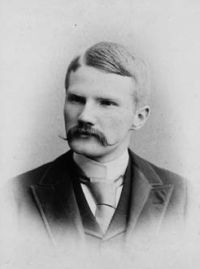
“ The monarchies of western Europe, which slowly emerged from the anarchy of the Dark Ages and helped to make the Middle Age the glorious and noble thing it was, are, if we consider them spiritually at least, democratic weapons, or rather, politically, they seem to sum up the national energy and to express it. ”
 Charles Homer Haskins,
The Normans in European History
(1915)
“ Western Europe in the Middle Ages knew but one empire, the Holy Roman Empire of the German Nation—from one point of view neither holy nor Roman nor an empire, as Voltaire long afterward remarked, yet, as revived by Charlemagne and Otto the Great, representing to the mind of the Middle Ages the idea of universal monarchy which they had inherited from ancient Rome. ”
S. P. Scott, History of the Moorish Empire in Europe… (1904)
“ The foundation of that dynasty marks a great epoch in the history of Europe. Of its noble deeds, in both war and peace, every individual of Moslem faith or Arab lineage may well be proud; proud of its long line of illustrious princes; proud of its conquests; proud of its civilization, which surpassed the splendors of Imperial Rome, and whose arts modern science has found it impossible to successfully imitate; proud of its unequalled agricultural prosperity; proud of the exquisite beauty of its edifices, still pre-eminently attractive even in their decay ”
 Montesquieu,
Persian Letters — Letter 101
(1721)
“ Who would imagine that the most ancient and powerful kingdom in Europe has been governed for ten centuries by laws which were not made for it? If the French had been conquered, it would not be difficult to understand, but they are the conquerors. ”
The New International Encyclopædia…
“ Under the feudal system of the Middle Empire, the nomarchs were the heads of ancient noble families, and were prompt to take advantage of any weakness in the Central Government to make themselves practically independent princes. ”
 Herbert Spencer,
Popular Science Monthly
(1882)
“ During this period and long after, besides wars with England (mostly fought out on French soil) and wars with other countries, there were going on everywhere local wars. From the tenth to the fourteenth century perpetual fights between suzerains and their vassals occurred, as well as fights of vassals with one another. Not until toward the middle of the fourteenth century did the king begin greatly to predominate over the nobles; and only in the fifteenth century was there established a supreme ruler strong enough to prevent the quarrels of local rulers. ”
 Isaac Newton,
Observations upon the Prophecies of Daniel…
(1733)
“ Now by the wars above described the Western Empire of the Romans, about the time that Rome was besieged and taken by the Goths, became broken into the following ten kingdoms.1. The kingdom of the Vandals and Alans in Spain and Africa. 2. The kingdom of the Suevians in Spain. 3. The kingdom of the Visigoths. 4. The kingdom of the Alans in Gallia. 5. The kingdom of the Burgundians. 6. The kingdom of the Franks. 7. The kingdom of the Britains. 8. The kingdom of the Hunns. 9. The kingdom of the Lombards. 10. The kingdom of Ravenna. Seven of these kingdoms are thus mentioned by Sigonius. ”
 B. H. Roberts,
The Seventy's Course in Theology…
“ When the divided monarchy is to be treated, the usual proceeding is to give the record of the northern kingdom first, and then the corresponding record for the southern, the history thus falling into periods longer or shorter. ”
Anonymous, Magic, Pretended Miracles, and Remarkable Natural Phenomena
“ There is a certain majesty in the simple outline of a route like this, traversing the most ancient seats of empire, and what we are taught to regard as among the earliest abodes of man—and now ministering to the connexion of England with that great sovereignty she has conquered, or created, in the east; more wonderful, with one exception, than any of the empires of antiquity; and, perchance, also, more important to the general destinies of mankind. ”
 Sir John Adye,
Recollections of a Military Life
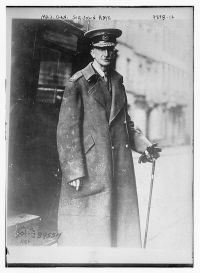
“ By consistently and courageously following out such a policy, we shall present a noble spectacle to the world of a great, prosperous, and, what is more, an enduring empire established by England in the East. ”
Gabriel Plattes, A Description of the Famous Kingdome of Macaria
“ That is excellent: I cannot conceive, but that if a Kingdome may be improved to maintaine twice as many people as it did before, it is as good as the conquest of another Kingdome, as great, if not better. ”
Portal:The Folk-Lore Society, Folk-Lore (1899)
“ If we know the importance of our aim, if we but will to act upon our knowledge, surely we can accomplish what chance apparently enabled our forefathers to accomplish. Imperial England of the sixteenth century preserved for later ages shapes and visions that greet us from out the oldest wonder-world of Celts and Teutons; may not imperial Britain of our days seek from the lips of passing races, before they have wholly passed away, sustenance and embodiment for the creation of new types of significance and beauty? ”
 Guglielmo Ferrero,
Characters and events of Roman History
(1909)
“ The Empire then covered Spain, France, Belgium, a part of Germany and Austria, Switzerland and Italy, the Balkanic countries, Greece, Asia Minor, Syria, Palestine, a part of Arabia, Egypt, and all northern Africa. I do not believe that the political personnel that made up the central government of this enormous Empire ever comprised more than 2000 men. The army charged with defending so many territories numbered about 200,000 men—fewer than the present army of Italy alone. ”
 D. G. Hogarth,
The Ancient East
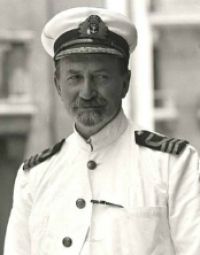
“ Thus the whole record of dynastic succession in the New Kingdom has been typically Oriental, anticipating, at every change of monarch, the history of Islamic Empires. There is no trace of unanimous national sentiment for the Great King. One occupant of the throne after another gains power by grace of a party and holds it by mercenary swords. ”
 Erskine Childers,
The Riddle of the Sands
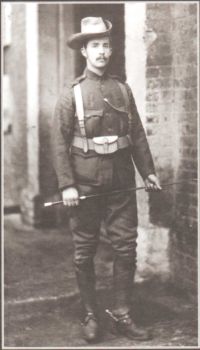
“ Here’s this huge empire, stretching half over central Europe—an empire growing like wildfire, I believe, in people, and wealth, and everything. They’ve licked the French, and the Austrians, and are the greatest military power in Europe. ”
 J. A. Cramb,
The Origins and Destiny of Imperial Britain
“ Consider in contrast with these empires the question—What is the distinction in this phase of human life of the Empire of Britain, of its history? Steadily growing from its first beginnings—shall I say, from that great battle of the Winwaed, where three Kings are in conflict and the slayer of two lies dead—steadily growing, on to the present hour, as in politics so in religion, the effort sometimes conscious, sometimes unconscious, but persistent, continuous, towards an ever purer, higher, nobler conception of man's relations to the Divine. ”
 John Morley,
Studies in Literature
“ The ancient monarchy of France, and all the old ordering of which the monarchy had been the keystone, was overthrown, and it was not until after many a violent shock of arms, after terrible slaughter of men, after strange diplomatic combinations, after many social convulsions, after many portentous mutations of empire, that Europe once more settled down for a season into established order and system. ”
Related terms
Authors who wrote about “Middle Kingdom”
James Harvey RobinsonJ. N. LarnedEdward A. FreemanGeorge Park FisherB. H. RobertsJ. Fr. MichaudCharles Homer Haskins Jacob AbbottJohn LordIsaac NewtonChang Chih-tungEarl of George Edward Stanhope Molyneux Herbert CarnarvonSartell PrenticeEmil Reich
 A. Mary F. RobinsonEdward B. TylorBrooks Adams
 William MorrisEdward HuttonMontesquieu
